

2026 Ford Bronco vs 2026 Toyota 4Runner for Trails, Snow, and Weekend Trips Near Spokane
Spokane is one of those rare cities where your weekend plans can shift from a snow-covered highway to a rocky forest trail in less than an hour. If you’re shopping for a capable off-road SUV in the Inland Northwest, the debate almost always comes back to the same two names: the 2026 Ford Bronco and the 2026 Toyota 4Runner. Both are built to handle punishment, and both have devoted followings. But they represent genuinely different ideas about what off-road driving should feel like.
We put them side by side here to help you decide which one fits the way you actually use roads, and the places where roads end. If the Bronco catches your attention, browse our current inventory at Wendle Ford to see what’s available now.
Trail Capability: Where the Bronco Pulls Ahead Off-Road
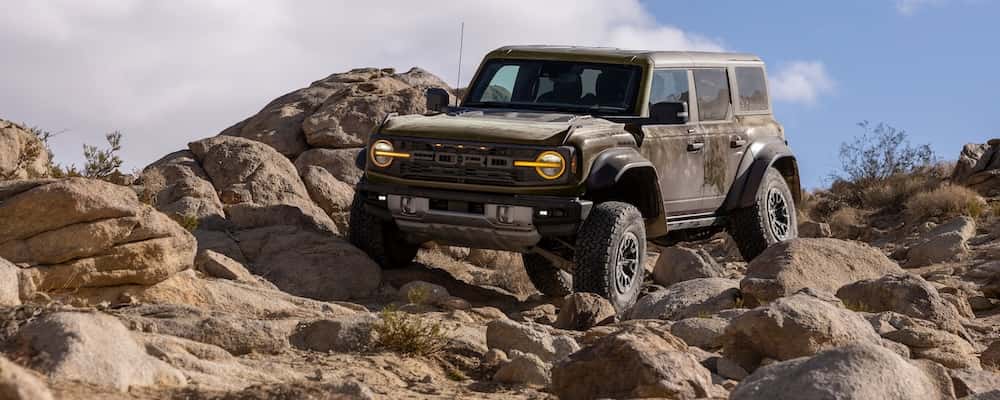
When the road ends and the trail begins, the 2026 Ford Bronco shifts from a capable SUV into something closer to a purpose-built off-road tool. If you spend serious time on Washington’s backcountry routes, that difference in approach matters.
Suspension, Clearance, and Locking Differentials
Both the Bronco and 4Runner share the same fundamental architecture, independent front suspension paired with a coil-sprung solid rear axle. Where the Bronco pulls ahead is in the geometry numbers and the hardware on top of that architecture. Strong ground clearance, generous approach and departure angles, and available front and rear locking differentials maintain traction where other SUVs would spin out or stall.
The 4Runner’s four-link rear setup is genuinely effective at keeping tires in contact with irregular surfaces, and it’s a proven configuration that earned its reputation over years of real-world use. From a pure geometry standpoint, though, the Bronco’s higher available clearance and steeper approach angles, especially with the Sasquatch Package or on the Raptor, give it a more controlled experience when the ground stops being predictable. For trails in the Selkirk Mountains or Colville National Forest, that translates into a less stressful ride.
4Runner’s Trail Legacy vs. Bronco’s Modern Engineering
The Toyota 4Runner’s off-road reputation is real and well-earned. The TRD Off-Road and TRD Pro trims have been go-to choices for overlanders and trail runners for good reason. They’re tough, low-maintenance vehicles that rarely leave drivers stranded.
The Bronco layers in features that experienced drivers genuinely appreciate in the field: G.O.A.T. Modes (Goes Over Any Type of Terrain) that adjust traction, throttle, and 4WD response for specific surfaces, Trail One-Pedal Drive (standard on Raptor, available on Outer Banks, Badlands, and Stroppe Edition with the 10-speed automatic), and purpose-designed approach and departure angles.
Ford built the Bronco from the ground up for exactly this kind of use, and it shows when routes get technical in places like Riverside State Park or the trails above Coeur d’Alene.
Winter Driving Practicality Around Spokane
Spokane winters don’t ease in gradually. I-90 can go from clear pavement to black ice without much warning, and snowfall in the surrounding area can close secondary roads fast. Whether you’re commuting through North Spokane or heading toward Mount Spokane for a weekend trip, you need an SUV that handles winter conditions without drama.
All-Weather Confidence on I-90 and Beyond
The 4Runner’s body-on-frame construction and available 4WD give it a planted feel on icy roads. Its weight works in its favor on packed snow, and Toyota Safety Sense 3.0 comes standard across all trims, covering forward collision warning, automatic emergency braking, and lane departure alert.
The Bronco brings a different kind of winter confidence. Its selectable drive modes let you tailor traction management to the specific surface, whether that’s compacted snow on I-90 or deeper powder on a forest service road heading toward the Palouse. Ford Co-Pilot360 safety technology is standard on Big Bend and higher trims (with a partial driver-assist set on Base), adding forward collision warning, automatic emergency braking with pedestrian detection, and post-collision braking.
For drivers who want more active control over how their vehicle responds in challenging conditions, the Bronco’s approach gives it a meaningful edge.
Comfort and Daily Drivability for the Long Haul
A Bronco that beats you up on the highway is only useful half the time. If your week includes school pickups and drives down Division Street just as much as trail runs, daily drivability matters.
The 4Runner is known for its passenger-friendly interior and long-haul comfort. Rear seat space is generous, road noise is well-managed for a body-on-frame SUV, and the ride is smooth enough for extended freeway driving. Families using their SUV as both a primary vehicle and a weekend off-roader tend to find the 4Runner a comfortable compromise.
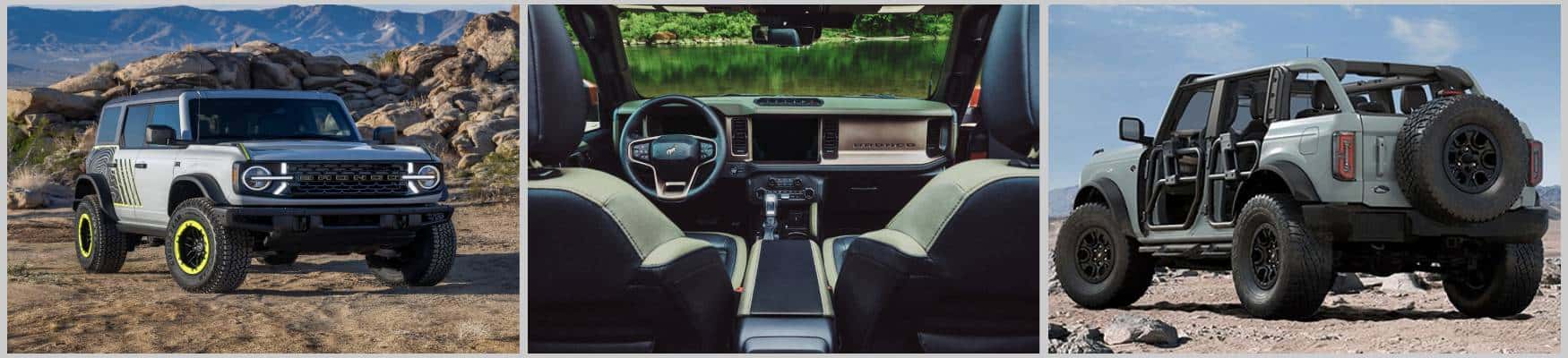
The Bronco leans sportier. Its ride is firmer and the driving position feels more engaged, which is exactly what trail driving calls for. On pavement, that translates to a more involving, fun-to-drive feel that commuters who enjoy driving tend to appreciate. It communicates the road in a way the 4Runner doesn’t.
Cargo Space and Gear Hauling: Spec-by-Spec Comparison
Weekend trips near Spokane often mean packing for two to four people, with ski equipment, mountain bikes, and camping gear along for the ride. Cargo capacity becomes a real consideration when you’re loading up for a Saturday near Riverside State Park or heading to Lake Roosevelt.
The 4Runner offers a larger overall cargo footprint behind the second row on two-row gas models, and the boxy, upright cargo area makes loading bulky gear straightforward. For families hauling a lot of stuff regularly, that extra cubic footage is a genuine advantage. Worth noting: the i-FORCE MAX hybrid trims have a higher load floor due to the battery placement, which reduces both volume and ease of loading heavier items.
The Bronco trades some raw cargo volume for smarter storage design and a more modular interior layout. Removable doors and roof panels open up the vehicle in ways the 4Runner can’t match, which makes a real difference for open-air travel on warm Inland Northwest weekends.
Day-to-Day Feel: Technology, Interiors, and Modern Features
Time inside both vehicles makes the generational gap obvious. The 2026 Bronco’s SYNC 4 infotainment system is intuitive, with a 12-inch LCD touchscreen, Apple CarPlay and Android Auto integration, and a digital interface designed for real-world use. A well-designed system reduces distraction and keeps map and media management genuinely easy on a long drive.
The 4Runner takes a more utilitarian approach, prioritizing ease of use over feature depth. There’s nothing wrong with that philosophy, but when comparing the two interiors side by side, the Bronco’s technology is clearly more current. If you’re juggling a playlist and directions while your kids ask questions from the back seat, the Bronco’s system handles that load more gracefully.
The table below covers key specs based on available manufacturer information:
| Spec | 2026 Ford Bronco | 2026 Toyota 4Runner |
|---|---|---|
| Engine/Powertrain | 2.3L EcoBoost I-4 standard; 2.7L EcoBoost V6 available; 3.0L EcoBoost V6 on Raptor; 7-speed manual or 10-speed automatic | 2.4L i-FORCE turbocharged I-4; 2.4L i-FORCE MAX hybrid available; 8-speed automatic |
| Drivetrain & 4WD | Standard 4×4 with two-speed transfer case on every trim; front and rear locking differentials standard on Raptor, available via Sasquatch Package on other trims | RWD or available 4WD; locking rear differential standard on TRD Off-Road, TRD Off-Road Premium, TRD Pro, and Trailhunter |
| Horsepower/Torque | Up to 418 hp / 440 lb-ft (Raptor) | Up to 326 hp / 465 lb-ft (hybrid); 278 hp / 317 lb-ft (turbo) |
| Ground Clearance | Up to 13.1 in. (Raptor); up to 11.6 in. with Sasquatch Package | Up to 10.1 in. (TRD Pro / Trailhunter) |
| Fuel Economy City/Hwy | Up to 20/21 MPG (2.3L); 15/16 MPG (Raptor) | Up to 20/26 MPG (turbo); 23/24 MPG (hybrid) |
| Cargo Volume Behind Rear Seats | Approx. 35.6 cu ft (4-door, hardtop) | Approx. 48.4 cu ft (two-row gas); 42.6 cu ft (hybrid) |
| Towing Capacity | Up to 3,500 lbs; 4,500 lbs (Raptor) | Up to 6,000 lbs |
If you’d like to dig into trim-specific configurations, contact our team at Wendle Ford and we’ll walk you through what’s available.
Which One Is Right for Spokane’s Mixed Terrain?
There’s no single right answer, because the Bronco and 4Runner are genuinely suited to different buyers. Both will handle what the Inland Northwest throws at them.
Matching the Right Vehicle to Your Driving
The 4Runner is hard to argue against for buyers who prioritize long-term reliability, a roomy family-friendly interior, and proven off-road performance in a low-fuss package. Its reputation was built on real results over decades of use.
The 2026 Bronco makes a compelling case for buyers who want a more capable, more modern off-road SUV built specifically for the terrain eastern Washington invites. When you stack up the 2026 Ford Bronco vs 2026 Toyota 4Runner specs with an active trail schedule in mind, the Bronco’s engineering gives serious adventurers more tools to work with.
Bronco Trim Recommendations for Spokane Drivers
The 2026 Bronco lineup includes Base, Big Bend, Outer Banks, Heritage Edition, Badlands, Stroppe Edition, and Raptor, with Wildtrak returning for 2026 as an option package on the four-door Badlands. Here’s how the most relevant configurations shake out for this region specifically.
Big Bend is a solid daily driver with standard 4×4, well-suited for winter commutes on I-90 and light trail use near Riverside State Park. Outer Banks leans toward comfort but still ships with trail-ready hardware, a reasonable middle ground for drivers who don’t want to give up either end entirely.
Badlands is the one to look at if you’re running the Selkirk Mountains or Colville National Forest routes regularly, since available front and rear locking differentials and factory-tuned suspension give it real technical capability. The Wildtrak Package, available exclusively on four-door Badlands models for 2026, layers in the 2.7L EcoBoost V6, the Sasquatch off-road kit, and HOSS 3.0 suspension with FOX internal bypass dampers. It covers both ends of the spectrum, giving you rock-crawling hardware via Sasquatch and high-speed dirt capability through the upgraded suspension. A solid pick for drivers who want one rig that handles Palouse backroads and Selkirk technical trails without compromise.
Raptor sits at the top of the lineup, and Ford engineers designed it specifically for extreme off-road use. It’s the choice for drivers who want to push farther than any other stock SUV in the lineup can go.
See the 2026 Ford Bronco at Wendle Ford
If you’re ready to move from comparison shopping to seat time, Wendle Ford is the place to do it. Located at 9000 N Division St in Spokane, we’ve been serving the Inland Northwest since 1943, and we bring that same community-rooted approach to every conversation about new vehicles.
Our team can walk you through the full 2026 Bronco lineup and help you match the right build to the driving you actually do. Browse our current inventory online, get a trade-in valuation, or apply for financing before you even set foot in the showroom. If you prefer to talk it through first, give us a call at 509-581-5268. Sales hours run Monday through Saturday from 8 a.m. to 7 p.m. and Sunday from 10 a.m. to 6 p.m.
Spokane’s terrain is genuinely great for testing what an SUV can do. If the 2026 Ford Bronco sounds like your kind of vehicle, we’re ready to help you find out.
Frequently Asked Questions
Is the 2026 Ford Bronco better than the 2026 Toyota 4Runner for off-road driving near Spokane?
The 2026 Ford Bronco is a stronger choice for drivers who want more technical off-road capability near Spokane. The 4Runner has a proven trail reputation, but the Bronco offers standard 4×4, available front and rear locking differentials, available Sasquatch Package hardware, G.O.A.T. Modes, and strong ground clearance for tougher routes around the Inland Northwest.
Is the 2026 Ford Bronco good for Spokane winters?
Yes, the 2026 Ford Bronco is well-suited for Spokane winters thanks to its standard 4×4 system, selectable drive modes, and available trail-focused hardware. Its traction settings can help drivers adjust to changing conditions on I-90, snowy neighborhood roads, and forest service routes outside the city.
Which 2026 Ford Bronco trim is best for Spokane drivers?
The best 2026 Ford Bronco trim depends on how you plan to drive. Big Bend is a strong choice for daily driving and light trail use, Outer Banks adds more comfort, Badlands is better for regular off-road trips, and Raptor is the top choice for drivers who want the most extreme factory-built off-road capability.
Does the 2026 Ford Bronco or 2026 Toyota 4Runner have more cargo space?
The 2026 Toyota 4Runner offers more cargo space behind the rear seats, especially on two-row gas models. The 2026 Ford Bronco has less raw cargo volume, but it offers a more modular layout with removable doors and roof panels for drivers who value open-air flexibility.
0 comment(s) so far on 2026 Ford Bronco vs 2026 Toyota 4Runner for Trails, Snow, and Weekend Trips Near Spokane