

2026 Ford Ranger Raptor vs 2026 Ford F-150 Raptor
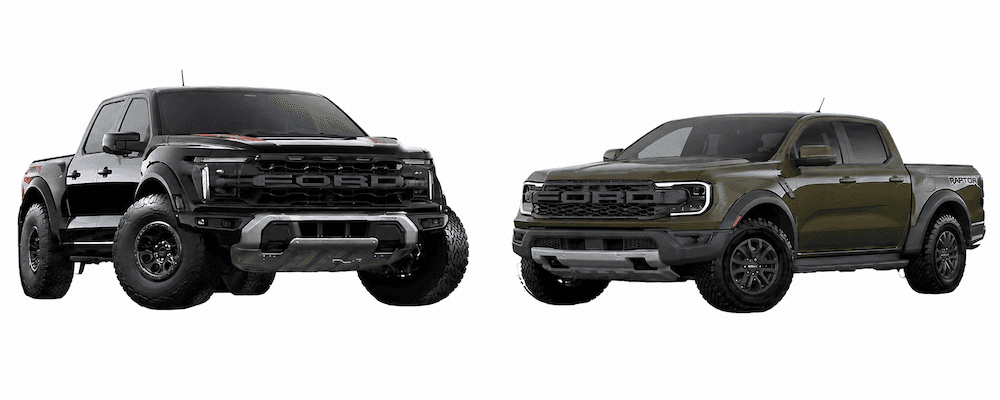
Ford builds two Raptors for a reason. The Ranger Raptor and the F-150 Raptor share DNA, but they serve genuinely different drivers. One is compact, agile, and built for tight trails snaking through the Cascades or the backcountry east of Coeur d’Alene. The other is a full-size powerhouse built to haul, tow, and command just about any terrain it encounters. If you’re ready to start looking, you can view current inventory at Wendle Ford right now.
For drivers in Spokane and the Inland Northwest, this decision carries more weight than it might elsewhere. You’re not picking between two trucks on a flat suburban road. You’re choosing between two tools that need to perform on Forest Service roads, handle I-90 in January, and still fit in a parking garage near downtown. When you put the 2026 Ford Ranger Raptor vs the 2026 Ford F-150 Raptor side by side, the differences come into focus fast. Here’s what you need to know before you decide.
Meet the 2026 Ford Ranger Raptor: The Compact Performance Truck Built to Surprise
When Ford brought the Ranger Raptor to the U.S. market, it filled a real gap: not every driver needs a full-size truck, but plenty still want serious off-road performance without sacrificing city maneuverability. The 2026 Ford Ranger Raptor builds on that promise, delivering a genuinely capable truck in a footprint that handles both tight urban streets and gnarly single-track trails.
What makes the Ranger Raptor stand out is that it doesn’t feel like a compromise. It’s not a tame, scaled-down version of a bigger truck. It’s a purpose-built off-road machine designed for versatility, and that distinction matters a lot in how it actually drives.
Power, Suspension, and What Makes It a True Raptor
The 2026 Ford Ranger Raptor runs a twin-turbocharged 3.0-liter V6 producing 405 hp and 430 lb-ft of torque, enough to sprint from 0 to 60 mph in 5.3 seconds. That output translates directly to trail confidence and quick highway merges on I-90. Paired with Ford’s Watts-Link rear suspension with trailing arms and Fox 2.5-inch Live Valve shocks, the Ranger Raptor absorbs rough terrain in a way that genuinely surprises drivers who expect a mid-size truck to feel choppy at speed.
Ground clearance comes in at 11.7 inches, with front and rear skid plates protecting the undercarriage on rocky surfaces. Factory 33-inch BFGoodrich KO3 all-terrain tires provide solid grip across varied surfaces, and terrain management settings including Baja mode and Rock Crawl let you dial in the truck’s behavior based on what’s ahead.
Meet the 2026 Ford F-150 Raptor: The Full-Size Standard-Bearer
The F-150 Raptor is the truck that defined the performance off-road segment, and the 2026 model keeps setting the bar. If the Ranger Raptor is built to surprise, the F-150 Raptor is built to dominate. Bigger, heavier, more powerful, it’s what you reach for when capability isn’t negotiable.
It also offers a more premium interior with significantly more passenger and cargo space. For families or drivers who routinely carry a full crew, that difference is felt immediately.
Bigger Engine, Bigger Capability, Bigger Presence
The 2026 F-150 Raptor is powered by a high-output twin-turbo 3.5-liter EcoBoost V6 producing 450 hp and 510 lb-ft of torque. Buyers who want more can step up to the Raptor R, a sub-variant that swaps in a supercharged 5.2-liter V8 producing 720 hp and 640 lb-ft of torque. Both configurations use Fox Live Valve shocks, which actively adjust damping in real time as the truck reads terrain changes.
The F-150 Raptor’s wheelbase and suspension travel are substantially larger than the Ranger’s, letting it carry higher speeds over rough terrain while staying planted. A wider track, reinforced front control arms, and 37-inch all-terrain tires make the F-150 Raptor feel engineered to cover ground aggressively.
Off-Road Capability: Cascades Trails, Idaho Backcountry, and Forest Service Roads
Spokane puts you within striking distance of some genuinely excellent off-road terrain. The Selkirk Mountains, trails near Priest Lake, Forest Service roads through the Colville National Forest, and backcountry routes across the Idaho border are all within a reasonable drive. Both Raptors are capable. They just excel in different conditions.
The Ranger Raptor’s narrower footprint and 33-inch all-terrain tires make it a meaningfully better fit for the tighter Pacific Northwest forest roads common throughout the Inland Northwest. When you’re threading through trees or navigating switchbacks on single-track, a narrower truck is simply easier to place precisely. The Ranger’s 11.7 inches of ground clearance and shorter overhangs also reduce the risk of getting hung up on ledges or rocks.
The F-150 Raptor owns wide-open terrain. High-speed desert-style running, river crossings, and expansive backcountry where raw power and suspension travel matter more than tight maneuvering is where it shines. Its suspension absorbs larger impacts more confidently at speed, and the power reserves give you more margin when conditions get demanding. Open country and high-speed runs through the Channeled Scablands suit the F-150 Raptor far better than tight forest corridors.
Towing, Payload, and Real-World Hauling for Spokane Drivers
For Spokane drivers who use their trucks for more than recreation, the specs below make the comparison very concrete. If you have questions about how these numbers apply to your specific hauling needs, contact us and our team can walk you through it.
|
Feature |
2026 Ranger Raptor |
2026 F-150 Raptor |
2026 F-150 Raptor R |
|
Engine |
3.0L Twin-Turbo V6 |
3.5L HO EcoBoost V6 |
5.2L Supercharged V8 |
|
Horsepower |
405 hp |
450 hp |
720 hp |
|
Torque |
430 lb-ft |
510 lb-ft |
640 lb-ft |
|
Max Towing |
5,510 lbs |
8,200 lbs |
8,700 lbs |
|
Payload |
1,513 lbs |
1,400 lbs |
1,400 lbs |
|
Fuel Tank |
20.3 gallons |
36 gallons |
36 gallons |
|
Tires |
33-inch BFGoodrich KO3 |
35-inch BFGoodrich KO2 (37-inch available) |
37-inch BFGoodrich KO2 |
|
0-60 mph |
5.3 seconds |
5.6 sec (Car and Driver) |
3.6 sec (Car and Driver) |
|
Transmission |
10-speed automatic |
10-speed automatic |
10-speed automatic |
|
Drivetrain |
4WD, electronic-locking front and rear diffs |
4×4, electronic-locking rear diff with Torsen front LSD |
4×4, electronic-locking rear diff with Torsen front LSD |
|
Shocks |
Fox 2.5-inch internal bypass with Live Valve Technology |
Fox Live Valve |
Fox Live Valve |
|
Starting MSRP (incl. destination) |
$58,965 |
$79,005 |
~$113,000 |
The Ranger Raptor’s 5,510 lbs of towing capacity is enough for a loaded ATV trailer or a smaller boat headed to Lake Roosevelt, and you get all of that without the bulk of a full-size truck. For a weekend trip to Twin Lakes or a camping run past Sandpoint, it’s more than adequate.
One counterintuitive detail worth noting: the Ranger Raptor’s payload capacity of 1,513 lbs actually edges out the F-150 Raptor’s 1,400 lbs. Buyers who assume bigger always means more capable in the bed may be surprised. That said, the F-150 Raptor’s 8,200 lbs of towing capacity is the clear winner for drivers who regularly haul a larger boat to a regional lake, pull a loaded trailer through the Cascades, or need a comfortable buffer on sustained heavy-duty work.
Daily Drivability: Parking, I-90 Commuting, and Winter Road Confidence
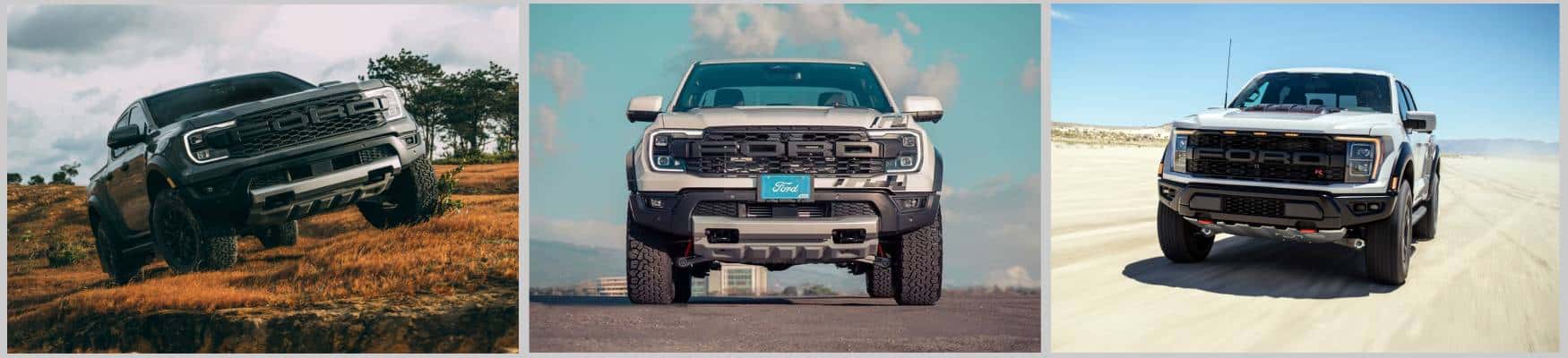
Off-road headlines sell trucks, but most Spokane drivers spend far more time on Division Street than they do on a trail. How each Raptor handles daily life matters just as much as how it handles the backcountry.
The Ranger Raptor’s compact dimensions give it a real advantage in the city. It’s easier to park, more manageable in tight lots, and less imposing in dense traffic. Its 20.3-gallon fuel tank also costs significantly less to fill than the F-150 Raptor’s 36-gallon tank, which adds up quickly for daily commuters.
The F-150 Raptor, while substantially larger, has evolved considerably in driver assistance technology. Ford’s advanced driver-assistance features reduce the stress of piloting a wide truck through traffic or on long highway stretches. On I-90 in winter, both trucks handle ice and snow competently. The Ranger’s lighter weight can work in its favor on slippery roads, while the F-150’s larger footprint provides more stability at higher speeds. For buyers who need that full-size presence and capability every day, the F-150 Raptor is the right fit, not the harder choice.
Price and Value: What Each Raptor Costs and What You Actually Get
The roughly $20,000 starting price gap between the Ranger Raptor ($58,965) and the F-150 Raptor ($79,005) is meaningful context for buyers deciding how much performance they actually need. The Raptor R’s ~$115,000 starting point reflects what a supercharged V8 and top-tier off-road engineering command at the pinnacle of Ford’s performance truck lineup. (All prices include destination fee.)
For buyers asking whether the Ranger Raptor is worth it: if you want Raptor-level performance, serious off-road engineering, and solid daily usability without paying full-size performance truck prices, it delivers exceptional value. The F-150 Raptor’s premium is justified when you genuinely use the towing capacity, need the interior room, or want the Raptor R upgrade path.
Choose the Ranger Raptor If…
- You prioritize maneuverability in town and on tight trails.
- You want lower fuel costs and a more accessible entry price.
- You don’t regularly tow loads above 5,500 lbs.
- Your off-road plans involve forest roads, technical terrain, or backcountry single-track where a narrower footprint is a real advantage.
- You’re a solo adventurer, a couple, or a driver who values versatility over maximum interior space.
Choose the F-150 Raptor If…
- You need maximum towing capacity and haul heavy loads regularly.
- You want a full-size interior for family road trips and long-haul comfort.
- Your terrain of choice is open country rather than tight trails.
- You want the Raptor R upgrade path and the absolute top end of factory-built off-road performance.
Find Your 2026 Ford Raptor at Wendle Ford in Spokane
Both the Ranger Raptor and the F-150 Raptor are available at Wendle Ford, a family-owned dealership serving Spokane and the Inland Northwest since 1943. Located at 9000 N Division St, our team can walk you through current inventory, trim comparisons, and financing options to help you land on the right truck.
Whether you want to sit in both side by side or take one out for a test drive, browse our new vehicle inventory to see what’s available, or reach out to our team directly to schedule a visit. The right Raptor exists for every kind of Spokane driver. The question is simply which one fits your version of the adventure.
Frequently Asked Questions
What is the main difference between the 2026 Ford Ranger Raptor and the 2026 Ford F-150 Raptor?
The 2026 Ford Ranger Raptor is a mid-size performance truck built for tighter trails, easier parking, and strong off-road capability in a more manageable footprint. The 2026 Ford F-150 Raptor is a full-size performance truck with more power, more towing capacity, a larger cabin, and a stronger fit for drivers who need extra space or regularly haul heavier loads.
How much can the 2026 Ford Ranger Raptor tow compared with the 2026 Ford F-150 Raptor?
The 2026 Ford Ranger Raptor can tow up to 5,510 pounds, while the 2026 Ford F-150 Raptor can tow up to 8,200 pounds. The 2026 Ford F-150 Raptor R increases that rating to 8,700 pounds, making it the stronger choice for larger trailers, boats, and heavier hauling needs around Spokane and the Inland Northwest.
Is the 2026 Ford Ranger Raptor better for daily driving?
The 2026 Ford Ranger Raptor may be the better daily driver for buyers who want Raptor performance without the size of a full-size truck. Its smaller footprint makes it easier to park, maneuver through traffic, and handle tighter roads, while still offering 405 horsepower, 4WD capability, and serious off-road hardware.
Which 2026 Ford Raptor is better for off-road driving near Spokane?
Both Raptors are capable off-road, but they suit different terrain. The Ranger Raptor is a strong fit for tighter forest roads, technical trails, and backcountry routes where maneuverability matters. The F-150 Raptor is better suited for open terrain, higher-speed off-road driving, and situations where extra suspension travel, power, and size are useful.
Is the 2026 Ford F-150 Raptor worth the higher price?
The 2026 Ford F-150 Raptor may be worth the higher price for drivers who need more towing capacity, more interior space, and full-size truck capability. The Ranger Raptor offers a lower starting price and strong performance value, but the F-150 Raptor is the better fit for buyers who regularly use their truck for heavier towing, family travel, or more demanding off-road conditions.
0 comment(s) so far on 2026 Ford Ranger Raptor vs 2026 Ford F-150 Raptor