

Best Tires for Your Ford F-150 Based on Terrain
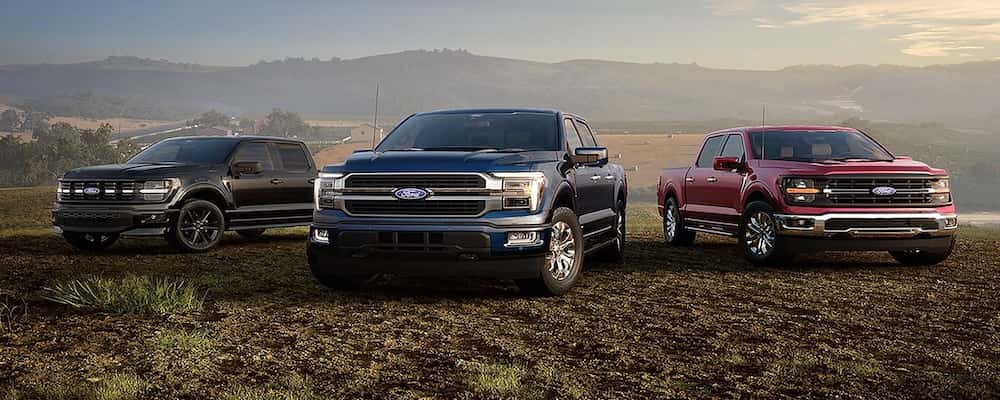
Your Ford F-150’s performance hinges on what connects your truck to the road. The right tire choice completely transforms how your vehicle handles everything from morning commutes on I-90 to weekend adventures in the Selkirk Mountains. Most F-150 owners don’t realize how much tires affect fuel economy, safety, and the overall driving experience until they finally make a change.
Spokane’s climate and terrain create unique challenges for tire selection. You’re dealing with blazing summer highways, icy winter streets, and rough trails that push every part of your truck to its limits. At Wendle Ford, we help F-150 owners sort through these choices daily, matching tires to how you actually drive your vehicle.
Why Tire Choice Matters for Your Ford F-150 in Spokane
Spokane tests your F-150 in every possible way throughout the year. Summer temperatures hit the 90s while winter brings heavy snow across the entire region. Your tires must grip rain-soaked roads during spring storms and hold steady when black ice forms on North Division Street.
The terrain around Spokane changes dramatically within just a few miles. You might start on smooth pavement downtown, then find yourself on gravel forest service roads by lunch. Each surface needs different tire characteristics, and the wrong choice leaves you fighting for control or burning through treads way too fast.
Road maintenance practices here affect tire performance in ways most drivers never consider. Spokane’s winter treatments, paired with constant freeze-thaw cycles, create tough conditions that destroy certain tire types. We suggest choosing tires built for these specific challenges to protect your investment and keep you safer all season long.
All-Season Tires
All-season tires prioritize daily usability over specialized performance. These handle your morning commute, grocery runs, and highway trips with consistent reliability. They use symmetric tread patterns with shallow grooves designed for stability at highway speeds while keeping decent grip on wet pavement.
Top all-season picks for F-150 owners include the Michelin Defender LTX M/S with its solid 70,000-mile warranty, Continental TerrainContact H/T, and Goodyear Wrangler Workhorse HT. These run quietly on highways and handle confidently on dry roads, with reliable traction when rain hits between Spokane and Coeur d’Alene.
All-season tires work perfectly for F-150 owners who stick mostly to pavement. If your truck mainly hauls cargo on city streets or travels interstate highways, these give you the versatility you need. They come in both P-Metric sizing for comfortable daily driving and LT configurations when you need extra load capacity for regular towing or hauling. Just don’t expect them to match dedicated winter tires when temps drop or provide serious off-road capability.
All-Terrain Tires
All-terrain tires bridge the gap between highway comfort and off-road capability. Their tread patterns use larger blocks with wider spacing compared to all-season designs, giving them better bite on loose surfaces. You’ll notice the difference immediately when gravel roads or muddy trails show up on your route.
We recommend the Falken Wildpeak A/T3W for its Three-Peak Mountain Snowflake certification and 55,000-mile warranty, the legendary BFGoodrich All-Terrain T/A KO2 or KO3 with Load Range E construction for puncture resistance, Toyo Open Country A/T III, and Goodyear Wrangler All-Terrain Adventure. These maintain decent highway manners despite looking aggressive, with reasonable road noise through carefully designed tread patterns.
All-terrain tires excel for drivers who spend time on both pavement and unpaved roads. The reinforced sidewalls resist punctures from sharp rocks, giving you confidence on rough trails. Their improved traction in loose dirt, gravel, and light mud makes them practical for construction workers, outdoor enthusiasts, and anyone who regularly heads beyond city limits. When you rotate and maintain them properly, these often deliver surprising tread life.
Mud-Terrain Tires
Mud-terrain tires push aggression to the next level with deep treads and massive voids designed to self-clean in brutal conditions. These specialized designs perform where other tires quit, powering through thick mud, deep sand, and loose gravel with serious tenacity. The Yokohama Geolandar M/T G003 offers M+S rating for versatile performance.
These come with real compromises for daily driving. Expect much louder road noise on pavement and worse fuel economy due to higher rolling resistance. Wet pavement handling requires extra caution since the deep voids reduce contact patch area.
We recommend mud-terrain options mainly for dedicated off-road enthusiasts who regularly tackle extreme terrain. Rock crawling in the Idaho backcountry, crossing deep mud at off-road parks, or navigating sandy desert trails all benefit from this capability. If you mostly drive on pavement with occasional weekend adventures, all-terrain tires probably work better.
Dedicated Winter Tires
Winter tires use specialized rubber compounds that stay flexible when temperatures drop. Regular tires stiffen in cold weather, losing their ability to conform to road surfaces and maintain grip. Winter tire rubber stays pliable even in sub-freezing conditions, providing the flexibility needed for solid traction.
Top winter choices include the Bridgestone Blizzak DM-V2, Michelin X-Ice Snow SUV, and Nokian Hakkapeliitta LT3. These feature thousands of small biting edges called sipes that slice through snow and grab ice. Deeper grooves channel slush away from the contact patch, preventing the tire from riding on built-up precipitation.
Spokane’s winter weather makes this investment worthwhile if you drive regularly during snow season. Switching to winter tires when temperatures consistently drop below 45 degrees provides dramatic safety improvement. You’ll get shorter stopping distances, better hill climbing ability, and more predictable handling when roads turn dangerous. Plan to switch back to your regular tires once spring arrives though, since winter compounds wear quickly in warm weather.
Key Decision Factors for Choosing Your F-150 Tires
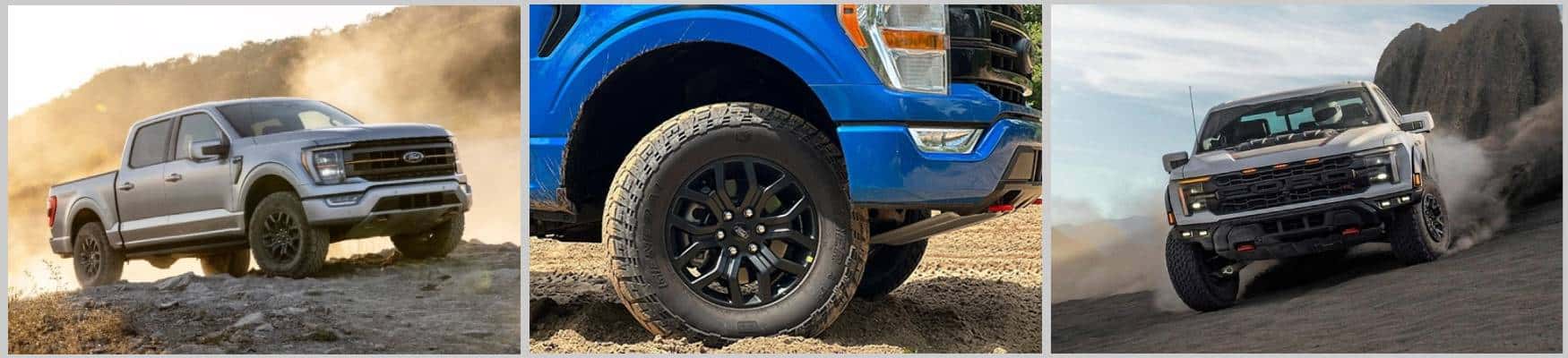
Tread Pattern and Road Noise Considerations
Tread design creates a direct relationship between off-road capability and highway comfort. Understanding these trade-offs helps you match tires to your actual needs:
| Tire Category | Tread Style | Road Noise Level | Best For |
| All-Season | Symmetric, shallow grooves | Low (quiet highway) | Daily commuting |
| All-Terrain | Aggressive blocks, reinforced sidewalls | Moderate | Mixed pavement/gravel |
| Mud-Terrain | Deep, open lugs | High | Extreme off-road |
| Winter | Dense sipes, soft compound | Low-moderate | Snow/ice |
We suggest matching tread aggression to your real needs rather than picking the most extreme design. Think about how much time you spend on pavement versus trails, then choose a tread pattern that emphasizes the conditions you face most often.
Wet Traction and Snow Performance Ratings
Tire manufacturers test and rate their products using standardized procedures. Look for the Three-Peak Mountain Snowflake symbol on tires designed for severe snow service. This certification means the tire passed specific performance criteria in snow testing, giving you real confidence when winter storms arrive. This goes beyond the standard M+S (mud+snow) rating that appears on all-season and all-terrain tires.
We recommend F-150 owners who drive year-round in Spokane prioritize strong wet traction grades and, ideally, Three-Peak Mountain Snowflake certification for reliable performance across all weather conditions.
Tread Life and Long-Term Value
F-150 tire costs go beyond the initial purchase price. Longer-lasting tires reduce your cost per mile even with higher upfront prices.
We stress the importance of proper inflation pressures, regular rotations every 5,000 to 7,000 miles, and correct wheel alignment to extend tread life significantly. For F-150 owners who tow or haul regularly, LT (Light Truck) tires provide necessary load capacity and durability, while P-Metric tires offer better comfort for mostly daily driving use.
Matching Tires to How You Actually Use Your Truck
Your driving patterns should drive tire selection more than wishful thinking about off-road plans. If 80 percent or more of your miles happen on pavement, all-season tires make practical sense. For frequent gravel roads, snow exposure, or job site access, all-terrain tires deliver the versatility you need. We advise against mud-terrain for daily highway use due to excessive noise and accelerated wear.
Work truck applications need different considerations than recreational use. F-150 owners who haul heavy loads regularly need LT construction with appropriate load ratings. Check your door jamb sticker for your F-150’s tire specifications and make sure any replacement meets or exceeds those ratings.
Weather patterns in your specific area within the Spokane region might differ from broader regional trends. We look at your actual exposure to snow, ice, and challenging terrain throughout the year, then recommend tires that address your real-world needs.
Find Your Perfect F-150 Tires at Wendle Ford
We bring decades of experience helping Spokane-area F-150 owners select tires that match their specific needs. Our service department at 9000 N Division St stocks a comprehensive selection across all categories, from highway-focused designs to aggressive off-road options.
Our approach focuses on understanding how you actually use your truck before recommending specific tires. We’ll give you straight talk about trade-offs between different tire types, helping you make an informed decision that improves both safety and satisfaction with professional installation, proper mounting, balancing, and alignment.
When you’re ready to explore F-150 tire options, contact us or call our service department at 509-565-8931. Investing in the right tires means investing in your truck’s reliability, safety, and performance for thousands of miles ahead.
Ford F-150 Tire FAQs for Spokane Drivers
What tire type makes the most sense for a Ford F-150 that stays mostly on pavement in Spokane?
All-season highway tires are usually the best match for mostly pavement driving because they prioritize quiet ride quality, stable handling at highway speeds, and solid wet traction. If the truck spends nearly all its time on city streets and I-90, an all-season option in the correct size and load rating is typically the most practical choice. If the truck regularly tows, hauls heavy loads, or sees rough job sites, an LT tire in a highway or mild all-terrain pattern can be a smarter fit.
Do all-terrain tires with the Three-Peak Mountain Snowflake symbol replace dedicated winter tires?
All-terrain tires with the Three-Peak Mountain Snowflake symbol can perform well in snow and are a strong year-round option for Spokane-area drivers who want one set of tires. Dedicated winter tires still provide the best ice traction and the most consistent cold-weather grip because their rubber compounds stay more flexible in low temperatures. Drivers who commute early, travel during storms, or frequently deal with icy streets often benefit from a dedicated winter set even if their all-terrains are snow-rated.
When should winter tires go on a Ford F-150 in Spokane?
Winter tires make the most sense when temperatures consistently stay below about 45 degrees, because that is when many non-winter compounds start to lose grip as they stiffen. Switching before the first major storms helps avoid scrambling during sudden weather changes. Winter tires should come off in spring once temperatures rise consistently, since winter compounds wear faster in warm conditions.
What is the Three-Peak Mountain Snowflake symbol, and why does it matter?
The Three-Peak Mountain Snowflake symbol indicates the tire meets a tested standard for severe snow service performance. It is more meaningful than a basic M+S marking because it reflects a tire that has met specific snow traction criteria. For Spokane drivers who see frequent snow or regularly travel outside the city in winter, this symbol is a helpful shortcut when comparing all-terrain and all-weather options.
Should an F-150 use LT tires or P-metric tires?
P-metric tires often ride more comfortably and can be a good fit for drivers who primarily use the truck for commuting and light-duty hauling. LT tires are built for heavier loads and tougher conditions, so they are commonly the better choice for frequent towing, payload, job site use, or rougher surfaces. The door jamb sticker lists the original tire size and load requirements, and replacement tires should meet or exceed those specifications.
How often should F-150 tires be rotated and aligned to help them last?
Many F-150 owners see better tread life by rotating tires every 5,000 to 7,000 miles, especially on heavier all-terrain patterns that can develop uneven wear if left in one position too long. An alignment check is smart after installing new tires and any time the truck pulls to one side, the steering wheel sits off-center, or uneven wear appears. Consistent tire pressure checks also play a major role in preventing premature wear.
0 comment(s) so far on Best Tires for Your Ford F-150 Based on Terrain