

Common Towing Mistakes Ford Owners Should Avoid
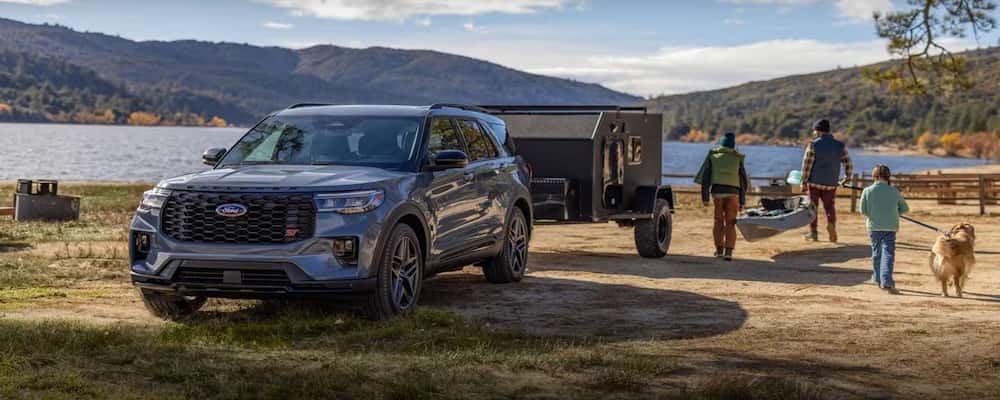
Towing looks simple until you’re halfway up Fourth of July Pass with a swaying trailer and a truck that suddenly feels smaller than it did in the driveway. Most towing mistakes come down to skipping a check that takes five minutes. We’ve put together this guide so Ford owners across the Inland Northwest can catch these issues before they become expensive or dangerous. If you want a professional set of eyes on your setup, our Ford service team is happy to help, or you can reach out to us directly.
Why Towing Mistakes Matter for Inland Northwest Ford Owners
Towing here isn’t the same as towing on flat interstate through Kansas. Between Lookout Pass, Fourth of July Pass, and the seasonal swings between dry summer highways and icy winter grades, this region asks more of a tow rig than most places do. A mistake that might be a minor inconvenience elsewhere can turn into a serious safety event on a steep downgrade with a loaded camper behind you.
We’ve been part of this community since 1943, and our Master-Certified Ford Service department has seen just about every towing setup that rolls through Spokane, Spokane Valley, Liberty Lake, Post Falls, and Coeur d’Alene. Check your weights, match your hardware, load smart, and inspect your tires and brakes before you drive. Do that consistently, and towing gets a lot less stressful. Here are the common towing mistakes we see most often, and how to avoid each one.
Mistake #1: Skipping Weight Checks and Ignoring Payload Limits
The most common towing mistake we see is drivers hooking up a trailer without confirming what their truck is actually rated to handle. Every Ford truck has specific towing capacity and payload figures, and those numbers change based on trim, engine, axle ratio, and factory equipment. Skipping this step is how people end up exceeding their vehicle’s limits without realizing it, which stresses the drivetrain and, more importantly, the brakes.
Understanding GCWR, Payload, and Tongue Weight
GCWR is the maximum weight allowed for your loaded truck and loaded trailer combined. This number governs both stopping ability and drivetrain capacity, and it should never be exceeded. A lot of owners don’t realize that your truck’s brake system is rated at GVWR, not GCWR. The brakes are engineered around the truck’s own weight limit, not the combined weight of truck and trailer together.
Payload is the combined weight of cargo and passengers your truck can carry, and it’s listed on the Tire and Loading Information Label found on the B-pillar or driver’s door edge. Anything you’ve added to the truck, like a topper or toolbox, needs to be subtracted from that number, and trailer tongue weight counts against your payload too.
Tongue weight should run about 10 to 15 percent of your total loaded trailer weight, with the higher end applying to fifth-wheel and gooseneck setups. Get it wrong in either direction and you’re in trouble: too much overloads the rear axle and lifts the front end, killing your traction, steering, and braking; too little sets you up for sway or jackknifing. According to Ford’s 2026 RV & Trailer Towing Guide, Ford recommends restoring about 50 percent of front axle load using weight-distribution bars when needed. Because these figures are vehicle-specific, we always tell customers to verify their exact numbers by VIN through Ford’s towing guide or with our service team.
Newer Ford trucks make this easier with Onboard Scales and Smart Hitch, which measure tongue weight and help you confirm you’re within spec before you ever leave the driveway.
Mistake #2: Using the Wrong Hitch Setup
A hitch might look like a simple piece of steel, but mismatched hardware is behind a lot of preventable towing accidents. Hitch classes follow the SAE J684 standard, and they vary widely: a Class 1 hitch handles up to 2,000 pounds gross trailer weight and up to 200 pounds tongue weight, while a Class 3 covers 3,500 to 8,000 pounds GTW with up to 800 pounds tongue weight. Heavy-duty Class 5 hitches climb to 16,000 to 20,000 pounds GTW and up to 2,700 pounds tongue weight. Using a hitch class below what your trailer demands is asking for trouble.
Mismatched Ball, Coupler, and Weight Distribution Issues
Ball size matters just as much as hitch class. A 1-7/8 inch ball is rated for trailers up to 3,500 pounds, a 2-inch ball covers 3,500 to 12,000 pounds, and a 2-5/16 inch ball handles 6,000 to 30,000 pounds. The ball rating always needs to meet or exceed your trailer’s loaded weight, and it needs to be torqued properly, not just snugged down.
Safety chains matter too. They should cross in an “X” pattern underneath the tongue and attach to separate frame-mounted points, never to the hitch ball itself. If your coupler ever pops loose, those chains are the only thing keeping the trailer connected to your truck.
We also see hitch slop causing subtle handling problems that owners write off as normal trailer sway. A trailer hitch slop eliminator removes the play between the hitch shank and receiver, so that clunk and wander you feel on rough roads mostly disappears. If your hitch has been rattling or your trailer feels loose behind you, our team can inspect the whole connection and recommend the right fix. It’s worth booking a service appointment before your next haul rather than living with a setup that isn’t quite right.
Mistake #3: Loading Your Trailer Unevenly
Even with the right hitch, a poorly loaded trailer will fight you the whole way down the highway. Uneven weight distribution is a leading cause of sway, and sway at highway speed is genuinely frightening. The general rule is to keep the load level, put around 60 percent of the cargo weight forward of the axle, and stack heavier items low and centered rather than up high or toward the back.
If sway does start, the instinct to steer sharply is the wrong one. Ease off the accelerator, keep the wheel straight, and let the trailer slow down naturally. Ford’s Trailer Sway Control uses sensors and selective braking to help manage this automatically, but good loading habits prevent the problem before technology has to step in.
Mistake #4: Forgetting Tire Pressure and Brake Checks
Tires and brakes take the brunt of towing stress, and they’re also the most commonly neglected part of pre-trip prep. Underinflated tires reduce load capacity, generate excess heat, and raise the risk of a blowout, a serious concern given that tire-related crashes contributed to 511 deaths in 2024, per NHTSA figures. Check every tire, including your spare, at cold PSI before each trip, since heat from driving will skew the reading. TPMS is required on model-year 2008 and newer vehicles and will trigger a warning once pressure drops 25 percent below the placard value, but that’s a backup, not a substitute for checking manually.
Tires should also be replaced after about six years regardless of remaining tread, since rubber degrades with age even if it looks fine. Any trailer over 1,500 pounds loaded needs its own functional trailer brakes, and Ford’s integrated trailer brake controller with adjustable gain lets you fine-tune how your truck’s brakes work with the trailer’s. If it’s been a while since anyone checked your brake pads, rotors, or controller settings, that’s exactly the kind of thing our service department checks during a towing inspection.
Mistake #5: Not Adjusting Driving Habits for Extra Weight
A loaded trailer changes everything about how your truck handles, and treating it like an unloaded drive is one of the most common mistakes we see, even among experienced owners. Stopping distances increase, turns need to be wider and more gradual, and acceleration takes longer. Ford’s Tow/Haul mode adjusts shift points and throttle response to help manage this, and hill start assist helps prevent rollback on grades, but neither replaces slowing down and giving yourself more room.
Towing in Mountain Passes, Snow, and Long Highway Stretches
Our regional mountain passes deserve real respect when you’re towing. Lookout Pass on I-90 near the Idaho-Montana border sits at 4,711 feet with a 6 percent grade for about five miles, and it has runaway ramps for a reason. Fourth of July Pass, just 11 miles east of Coeur d’Alene, brings a 5 percent grade at 3,173 feet. Both can see snow anywhere from October through May, per the Idaho Transportation Department, and black ice is common near freezing temperatures even when the road looks clear.
Idaho’s I-90 chain law can be activated by the Idaho Transportation Department whenever winter storm conditions require it on mountain passes like Lookout and Fourth of July Pass. If you’re heading further west, Snoqualmie Pass has a 69-mile chain zone between mile markers 32 and 101, with a $500 fine for non-compliance. On long highway stretches, fatigue creeps up faster when you’re towing, so build in regular breaks. Available AWD or 4WD, along with BLIS® with trailer coverage, can help you manage traction and blind spots, but slowing down for conditions is still on the driver.
Local Towing Scenarios: Boats, Campers, and Seasonal Trips
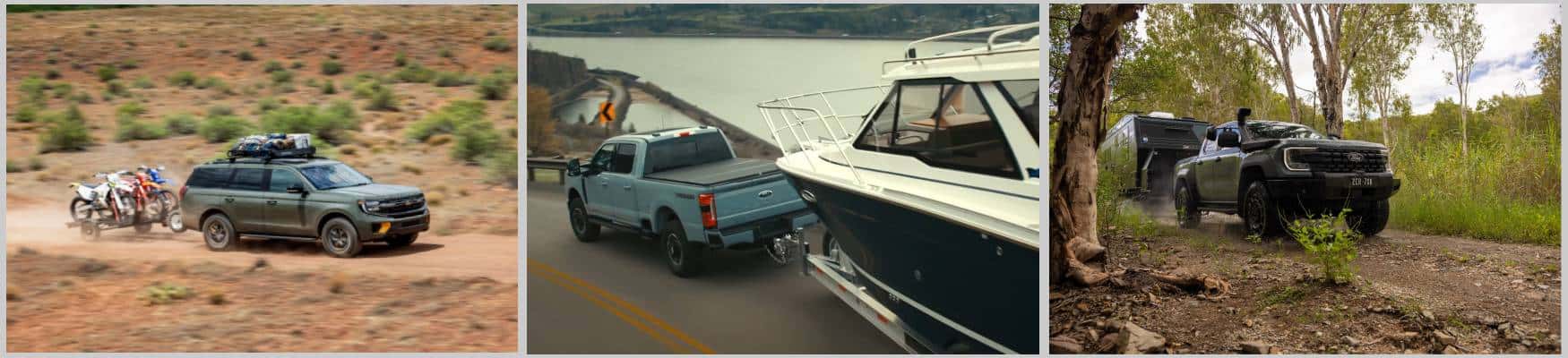
Boat season around here usually means launching at spots like Bayview on Lake Pend Oreille, or Carlin Bay and Mica Bay on Lake Coeur d’Alene, which stretches roughly 25 miles end to end. Loon Lake north of Spokane and Sandpoint’s access to Lake Pend Oreille, Idaho’s largest and deepest lake, round out popular weekend destinations. Whatever the water, follow clean-drain-dry protocols and stop at inspection stations to keep aquatic invasive species from spreading between lakes.
Camper season brings its own considerations, especially at Farragut State Park and Riley Creek, both on Lake Pend Oreille, or Luby Bay on Priest Lake. A camper’s height and length change how wind and crosswinds affect handling compared to a boat trailer, so weight distribution and tongue weight checks matter just as much, if not more.
Pre-Haul Checklist for Confident Towing
Run through this before every trip, no matter how familiar the route:
- Confirm your GCWR, payload, and tongue weight against your Ford’s specific ratings, verified by VIN.
- Inspect hitch, ball, and coupler for correct size and rating, and torque connections properly.
- Cross safety chains in an “X” pattern to separate frame points, never the hitch ball.
- Check tire pressure cold on every tire, including the spare, and inspect tread and age.
- Test trailer brakes, brake controller gain, and all trailer lights.
- Load cargo low and centered, with roughly 60 percent of weight forward of the axle.
If any item on this list raises a question you can’t answer with confidence, bring it to our service team. That’s what we’re here for.
Schedule a Towing Inspection with Wendle Ford
Let Our Team Double-Check Your Setup
Good towing habits come from routine, and from having a trusted shop double-check the details you might miss on your own. As a family-owned dealership serving the Inland Northwest since 1943, our Master-Certified technicians use genuine OEM parts and factory training to make sure your Ford, hitch, and trailer are matched correctly for whatever you’re hauling this season.
Ready When You Are
Whether you need a full towing inspection, a hitch adjustment, or help matching the right tow package to a new truck, our team is ready. Contact our team or schedule your pre-season check before your next trip to the lake, the mountains, or anywhere else on your list.
Frequently Asked Questions
What is the most common towing mistake Ford owners make?
One of the most common towing mistakes is hooking up a trailer without confirming the truck’s exact towing capacity, payload rating, GCWR, and tongue weight. These limits vary by vehicle, engine, axle ratio, trim, and equipment, so Ford owners should verify ratings by VIN before towing.
How much tongue weight should a trailer have?
Trailer tongue weight should generally be about 10 to 15 percent of the total loaded trailer weight. Too much tongue weight can overload the rear axle and reduce steering control, while too little tongue weight can increase the risk of trailer sway.
Why does hitch setup matter when towing?
The hitch, ball, coupler, and safety chains all need to match the trailer’s loaded weight and connection requirements. Using an underrated hitch, incorrect ball size, loose connection, or improperly crossed safety chains can make the trailer unstable or unsafe.
What should I check before towing through mountain passes?
Before towing through mountain passes, check the truck’s weight ratings, hitch setup, trailer loading, tire pressure, trailer brakes, brake controller gain, lights, and safety chains. Drivers should also adjust speed, increase following distance, use Tow/Haul mode when appropriate, and prepare for snow, ice, grades, and changing road conditions.
Should I schedule a towing inspection before a long trip?
Yes, a towing inspection is a smart step before a long trip, especially if you are hauling a camper, boat, work trailer, or heavy load. A technician can inspect the hitch, brakes, tires, lights, suspension, trailer brake controller, and overall setup before you leave.
0 comment(s) so far on Common Towing Mistakes Ford Owners Should Avoid