

Ford 4WD vs AWD: What’s the Difference and Which Do You Need?
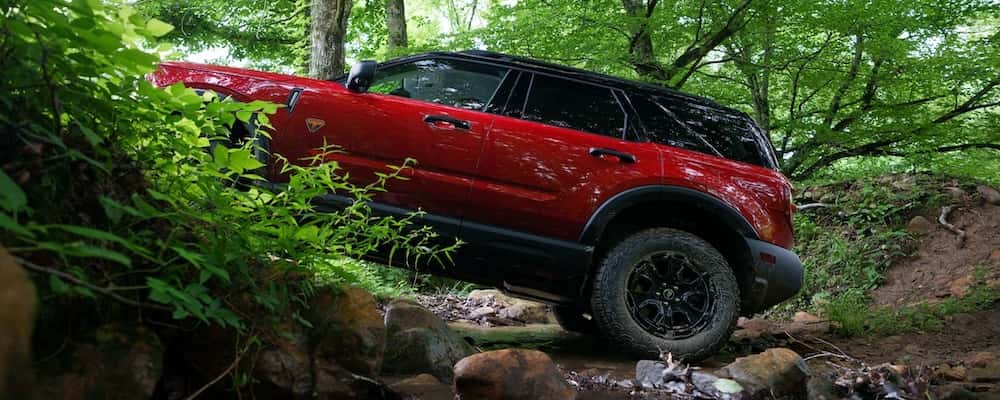
Spokane drivers deal with a lot: icy intersections in January, muddy back roads in spring, and the occasional mountain pass run to the ski hill. When you’re shopping for a new Ford, one of the most practical questions you’ll face is whether to go with all-wheel drive or four-wheel drive. The difference runs deeper than most people expect, and choosing the wrong system for how you actually drive can cost you in performance, fuel economy, and peace of mind.
Ford 4WD vs AWD: What’s Actually Different (and Why It Matters in Spokane)
At the core, this comes down to design intent. AWD systems are built for on-road performance, automatically delivering power to all four wheels to maintain stability and traction. Four-wheel drive, by contrast, was engineered for rugged terrain and serious off-road use, giving drivers the muscle to push through deep snow, loose gravel, and challenging backcountry roads.
For Spokane drivers, this distinction matters more than it would in most parts of the country. The Inland Northwest throws a wide variety of conditions at you throughout the year. You might be navigating icy streets on a Tuesday morning and heading up to a trailhead that same Saturday. Neither system is universally better; the right choice depends entirely on how and where you drive.
| System Type | How It Engages | Best Use Case | Driver Input Required | Available Ford Models | Fuel Economy Impact |
| Intelligent AWD | Automatic, continuously variable torque split | Commuting, light snow, rain, paved roads | None | Escape, Maverick, Bronco Sport | Minimal; system defaults to front-wheel drive and engages rear wheels only when needed |
| Intelligent 4WD | Computer-controlled, automatic with terrain modes | Mixed road conditions, light to moderate off-road | Minimal (drive mode selection on some models) | Explorer, Bronco Sport (Badlands trim) | Moderate |
| Selectable 4WD (2H / 4A / 4H / 4L) | Driver-selected, with 4A auto mode on most models | Deep snow, trails, towing, mountain passes | Yes | F-150, Ranger, Bronco, Expedition, Super Duty | Higher; 4WD typically uses more fuel due to drivetrain weight and engagement |
You can browse our new Ford inventory to see which drivetrain options are currently available across Ford’s lineup.
How Ford AWD Works and What It’s Designed For
The Ford AWD system is designed to be invisible to the driver. It monitors wheel slip and redistributes torque automatically, with no button to press and no mode to select. The system favors front-wheel drive most of the time for fuel efficiency, then engages all four wheels the moment slip is detected.
That design philosophy makes Intelligent AWD a great fit for drivers who want better traction without adding complexity to their daily routine. If one set of wheels starts to slip on a wet road or a patch of black ice, power shifts to the wheels with better contact in fractions of a second.
When AWD Excels: Commutes, Rain, and Light Snow
AWD earns its keep in urban and suburban driving, especially during Spokane’s mixed-weather months from October through March. It handles light snow, keeps vehicles stable in rain, and adds grip on gravel driveways or unpaved neighborhood roads. For most commuters, AWD provides exactly the right capability without sacrificing fuel efficiency or ride comfort.
That said, AWD has limits. In deep snow or genuinely rough terrain, the system can reach the edge of what it’s capable of. If your driving regularly includes mountain passes in heavy winter conditions, Forest Service roads, or pulling a trailer across uneven ground, you may need four-wheel drive.
A common question: is AWD good enough for snow? For Spokane’s typical winter commute (plowed streets, occasional ice, light accumulation), yes. For Fourth of July Pass in a February snowstorm or a Forest Service road that hasn’t seen a plow, 4WD is the more capable choice.
How Ford 4WD Works and When You Actually Need It
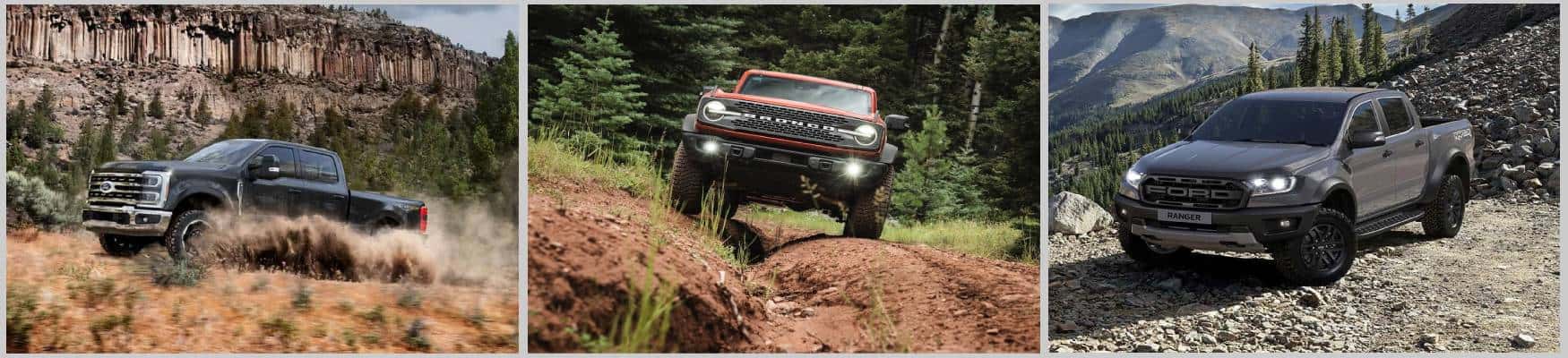
Ford 4WD uses a transfer case, which is a secondary gearbox that splits power between the front and rear axles, to lock all four wheels together. This delivers raw, reliable traction across surfaces where AWD might struggle. But that mechanical lockup means 4WD isn’t designed for everyday street use. Driving in 4WD on dry pavement can cause drivetrain stress, so knowing when to engage it matters.
Ford 4WD systems give drivers direct control through selectable modes:
- 2WD – standard driving on dry pavement; best fuel efficiency
- 4A (Auto 4WD) – available on select models; engages automatically as needed
- 4H (4WD High) – for slippery roads at highway-safe speeds
- 4L (4WD Low) – for crawling over obstacles, steep terrain, or deep snow
Where 4WD Excels: Mountain Passes, Off-Road, and Towing
Heading over Stevens Pass or Lookout Pass in heavy snow? Driving forest roads in the Selkirks? Four-wheel drive handles those conditions in ways AWD simply isn’t built to match. The locked-axle design sends power to all wheels regardless of individual grip, making it far more effective in extreme situations.
This also makes 4WD the right call for truck owners who tow or haul in challenging conditions. Does 4WD use more fuel? Yes. The added drivetrain weight and mechanical engagement typically reduce fuel efficiency compared to AWD, which is why most 4WD vehicles are driven in 2WD under normal conditions and shifted into 4WD only when needed.
Which is better for towing? 4WD, without question. The transfer case and locked axles provide greater stability and control when pulling a trailer on steep or slippery terrain, a real consideration for anyone hauling a boat to a lake near Coeur d’Alene or a horse trailer across a muddy field.
Matching Your Drivetrain to Inland Northwest Driving Conditions
| Condition | Recommended System | Why It Fits |
| Spokane winter commute (plowed streets, light snow) | AWD | Automatic engagement handles typical city conditions without driver input |
| Mountain passes (Stevens Pass, Fourth of July Pass, Lookout Pass) | 4WD | Deep snow and steep grades require selectable low-range capability |
| Gravel roads near Coeur d’Alene | AWD or 4WD (4H) | AWD handles light gravel; 4H adds stability on rougher unpaved surfaces |
| Off-road trails in the Selkirks | 4WD (4H / 4L) | Rocky terrain and obstacles demand locked-axle control |
| Towing or hauling in mixed conditions | 4WD | Better stability and drivetrain authority under load |
| Daily errands, highway driving | AWD | Automatic, efficient, no driver management required |
Ford AWD vs 4WD Models: Which Systems Are Available
Ford’s lineup covers both drivetrains across a wide range of vehicles. Here’s where each confirmed model lands:
AWD / Intelligent AWD
- Escape – AWD available on select trims
- Maverick – AWD available (combined with hybrid powertrain on select trims, and with Advanced 4WD on the Tremor)
- Bronco Sport – computer-controlled AWD (Ford markets some versions as “4×4,” but this is not a traditional transfer-case-based 4WD system)
Intelligent 4WD
- Explorer – available with selectable drive modes and 4WD capability across most trims
Selectable 4WD
- F-150 – multiple 4WD configurations
- Bronco – purpose-built 4WD with 4H and 4L modes
- Ranger – truck-level 4WD in a more maneuverable package
- Super Duty – available 4WD for maximum towing and hauling
- Expedition – available in 4WD trims
If budget is a factor, you can also explore used Ford vehicles. Many pre-owned F-150s, Explorers, and Escapes are available with the drivetrain you need at a lower price point.
How to Choose Between AWD and 4WD Based on How You Drive
Here’s a quick framework to match your driving life to the right system:
- If you primarily drive paved Spokane roads with typical winter snow → AWD
- If you occasionally hit gravel or lightly unpaved roads → AWD handles it
- If you regularly cross mountain passes in heavy snow → 4WD
- If you off-road, hunt, or use forest roads → 4WD
- If you tow a trailer or haul heavy loads in tough conditions → 4WD
- If you want maximum simplicity with automatic traction management → AWD
One thing worth knowing: you can’t switch between AWD and 4WD on the same vehicle. These are different mechanical systems entirely. That said, models like the F-150 let you switch between 2WD, 4H, and 4L as conditions change, giving you real flexibility within the 4WD system itself.
AWD vs 4WD isn’t a question of which is better in some absolute sense. It’s about which fits your actual driving life, the roads you cover, what you haul, and how far from pavement you’re willing to go.
Talk to Wendle Ford and Find the Right Drivetrain for Spokane
We help Spokane drivers match the right drivetrain to the way they actually drive, not just the spec sheet. Whether you’re leaning toward an AWD crossover for the daily commute or a 4WD truck for serious weekend use, our team can walk you through the options with straight answers and no pressure.
Contact Wendle Ford to get personalized guidance or schedule a test drive. It’s the fastest way to know which system is right for you.
Frequently Asked Questions About Ford AWD and 4WD
What is the difference between Ford AWD and 4WD?
Ford AWD is designed for automatic on-road traction, sending power to the wheels that need it without driver input. Ford 4WD is built for tougher conditions, giving drivers more control for deep snow, trails, towing, and rugged terrain.
Is AWD good enough for Spokane winters?
AWD is a strong fit for typical Spokane winter driving, including plowed roads, light snow, rain, and occasional ice. If you regularly drive mountain passes, deep snow, or unplowed roads, 4WD may be the better choice.
When should I choose 4WD instead of AWD?
Choose 4WD if you tow, haul heavy loads, drive off-road, use forest roads, or regularly travel through mountain passes in heavy winter conditions. 4WD provides stronger capability for low-traction and uneven terrain.
Does 4WD use more fuel than AWD?
4WD typically uses more fuel because of added drivetrain weight and mechanical engagement. Many Ford 4WD vehicles can be driven in 2WD under normal conditions, then shifted into 4WD when extra traction is needed.
Can I switch between AWD and 4WD on the same Ford vehicle?
No. AWD and 4WD are different mechanical systems, so you cannot switch between them on the same vehicle. Some Ford 4WD models do allow you to switch between modes such as 2WD, 4A, 4H, and 4L.
Which Ford models offer AWD or 4WD?
Ford AWD is available on models such as the Escape, Maverick, and Bronco Sport. Ford 4WD is available on models such as the F-150, Ranger, Bronco, Expedition, Explorer, and Super Duty.
0 comment(s) so far on Ford 4WD vs AWD: What’s the Difference and Which Do You Need?