


How to Load a Trailer More Safely Before Heading Out of Spokane
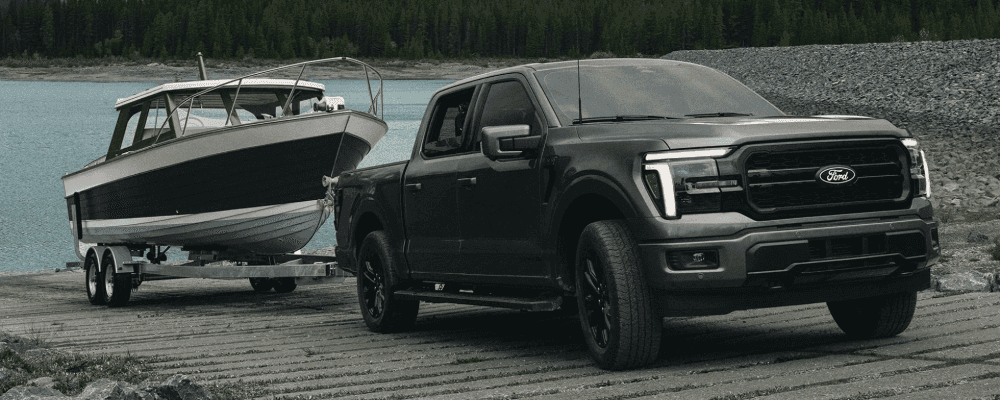
Most trailer trouble starts before the truck ever leaves the driveway. A load packed too far back, a worn hitch ball, or a strap that seemed good enough can turn an easy weekend at the lake into a white-knuckle drive home.
The numbers back that up. A Louisiana State University analysis of federal crash data found that trailer-related crashes averaged about 1.2 deaths and 60 injuries every day over a 24-year period. The good news is that most of the fixes are simple, and nearly all of them happen while you load.
Why Placement Matters More Than Weight
It is natural to focus on how much you are hauling. Engineers at the University of Bath found something more useful. In controlled tests, how the weight was distributed and where the trailer axle sat had a bigger effect on high-speed stability than the trailer’s total mass.
It can be that a moderately loaded trailer packed badly can be harder to control than a heavy one packed well.
Get the Tongue Weight Right
Tongue weight is the downward force the trailer puts on your hitch. For a conventional ball-hitch trailer, the standard target is 10 to 15 percent of the loaded trailer weight. Ford engineers use the same range. A recent Ford patent on trailer sway control treats a tongue load under 10 percent as light, noting it makes sway more likely, and anything over 15 percent as heavy.
For a 5,000-pound loaded trailer, that means roughly 500 to 750 pounds on the hitch. Too little lets the trailer swing like a pendulum. Too much pushes down the back of the truck, takes weight off the front tires and reduces steering and braking.
Every truck also has its own maximum tongue weight and towing rating, listed on the door jamb sticker and in the owner’s manual. If your trailer is pushing those limits, it may be time for more truck.
SHOP FORD TRUCKS BUILT TO TOW →
Load Front to Back, Low to High, Side to Side
- Front to back: Most guidance lands at about 60 percent of the cargo weight ahead of the trailer axle. Purdue Extension, of Purdue University, recommends about 65 percent in the front half of the trailer.
- Low: Put the heaviest items on the floor, over or just ahead of the axle.
- Side to side: Balance left and right so the trailer sits level.
- Hitch first: Purdue advises connecting the trailer to the truck before loading so the tongue does not tip up.
Once loaded, the truck and trailer should sit level or slightly nose down. If the rear tires are tucked into the wheel wells or your headlights are aimed at the treetops, there is too much weight on the tongue.
Strap It Down Like Someone Is Following You
Someone usually is. A 2025 AAA Foundation for Traffic Safety study estimates road debris contributes to about 53,000 crashes a year nationwide. It was found that almost half of debris-related deaths happened when a driver swerved to avoid something in the road, not when they hit it.
The problem shows up close to home, too. Unsecured loads caused 337 crashes and 32 injuries across Washington in 2024, and the state’s 2022 litter study found that 39 percent of roadside litter by weight comes from unsecured loads. .
- Tie large items directly to the trailer’s anchor points, not to each other.
- Use rated ratchet straps instead of bungee cords for anything heavy.
- Cover loose material like yard waste or lumber scraps with a tarp or cargo net.
- Pull over after the first few miles to check straps, since loads settle.
Treat the Hitch System Like a Chain
A hitch is only as strong as its weakest rated part: the receiver, ball mount, pin, ball and coupler. If the ball is rated for 3,500 pounds, it does not matter that your truck can tow 10,000.
Let’s take a closer look at safety chains. In one inspection program cited in the LSU study, 46.6 percent of more than 51,000 trailers had faulty safety chains. Crisscross the chains under the trailer’s hitch before hooking them to your vehicle. The safety chains need to be strong enough to hold the full weight if your trailer when it’s fully loaded with cargo. If the chain doesn’t have a visible safety rating or grade stamped on it, assume that it has the lowest possible strength rating. Purdue also recommends replacing a hitch ball once it has worn 1/8 inch from its original diameter.
If your trailer weighs more than 3,000 pounds, Washington law requires brakes on all wheels and a breakaway system that holds for at least 15 minutes. Clip the breakaway cable to the truck itself, not to the safety chains.
SHOP HITCHES AND TOWING PARTS →
Five-Minute Pre-Departure Checklist
- ☐ Tire pressure checked cold on the truck and trailer
- ☐ Lug nuts tight on every wheel
- ☐ Coupler latched and pinned on the ball
- ☐ Safety chains crossed under the tongue and off the pavement
- ☐ Breakaway cable attached to the truck
- ☐ Running lights, brake lights, turn signals, and brake controller working
- ☐ Load strapped, covered, and balanced
- ☐ Tongue jack fully raised
On the Road: Speed, Sway, and Winter Passes
Washington limits any vehicle weighing over 10,000 lbs, which includes most trucks and vehicles towing trailers, to 60 mph, even where cars can legally drive 70 on I-90. The lower limit has a reason. NHTSA notes that sway becomes more likely as speed increases.
If the trailer starts to sway, ease off the accelerator and hold the wheel steady. Avoid stomping on the truck’s brakes, which tends to make sway worse. If you have an electric brake controller, apply the trailer brakes by hand to pull the trailer back in line.
As fall turns to winter, check WSDOT pass reports before crossing the mountains. When traction tires are required, vehicles over 10,000 pounds GVWR need chains, and that includes many heavy-duty pickup and trailer combinations.
Brakes, tires and wheel bearings work hardest on long grades, so a quick inspection before a mountain trip is worth the time.
SCHEDULE A PRE-TRIP INSPECTION →
A Few Extra Minutes Make the Trip
Loading well does not take special skills. It takes a scale, a few good straps and the patience to walk around the rig one more time before you pull out. If you would like a second set of eyes on your hitch, brakes, or tires before a big trip, the service team at Wendle Ford is happy to help.
Schedule Test Drive → |
View Inventory → |
Get Your Trade-In Value → |
Frequently Asked Questions
How do I measure tongue weight?
The easiest way is a tongue weight scale placed under the trailer jack. You can also use a public scale: weigh the truck with the trailer hitched, then the truck alone. The difference is your tongue weight.
What is the speed limit when towing in Washington?
Any vehicle towing a trailer weighing more than 10,000 pounds, is limited to 60 mph, regardless of the posted car speed limit.
When are trailer brakes required in Washington?
Trailers with a gross weight over 3,000 pounds need brakes on all wheels plus a breakaway system.
0 comment(s) so far on How to Load a Trailer More Safely Before Heading Out of Spokane