


How to Use Ford Pro Power Onboard for Work or Camping
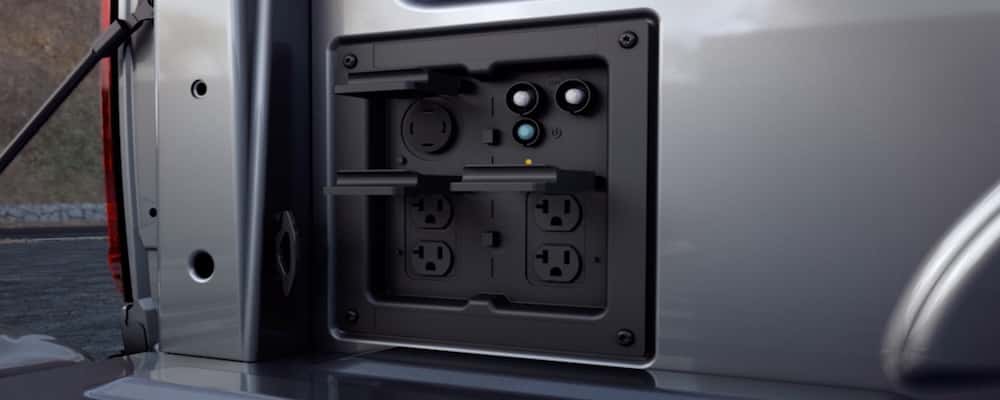
Your Ford F-150 can do more than haul loads and tow trailers. With Ford Pro Power Onboard, your truck becomes a mobile generator capable of running power tools at remote job sites or keeping camping gear charged in the Inland Northwest wilderness. Whether you’re framing a house in Spokane Valley or setting up camp at Riverside State Park, understanding how to use this system transforms how you work and play.
This feature eliminates the need for bulky portable generators. You get clean, quiet electricity wherever your truck can go, with enough output to handle everything from circular saws to portable refrigerators.
What Is Ford Pro Power Onboard
Ford Pro Power Onboard transforms your F-150 into a mobile power source by integrating a generator system directly into the vehicle’s architecture. The system draws power from your truck’s hybrid or electric powertrain to deliver standard household electricity through built-in outlets.
The system comes in three power configurations: 2.0 kW, 2.4 kW, and 7.2 kW. The entry-level setup handles basic needs like charging phones, running lights, or operating a laptop. The 7.2 kW configuration delivers serious capability, supporting multiple high-draw tools simultaneously or powering an entire campsite setup.
What sets this system apart from portable generators is its integration with your vehicle. You don’t need to haul extra equipment, store fuel, or deal with exhaust fumes. The power flows silently and cleanly, and your truck manages everything automatically.
Which F-150 Trims Include Pro Power Onboard
Pro Power Onboard appears across multiple F-150 configurations. The 2.4 kW system comes standard on F-150s equipped with the 3.5L PowerBoost Full Hybrid V6 engine. For maximum output, the 7.2 kW option can be added to PowerBoost hybrid models. The 7.2 kW system runs up to 32 hours at maximum load on a full tank, with longer runtime at lighter loads.
When shopping for an F-150, confirm the power configuration matches your needs. Not every F-150 carries this feature, so verify availability before purchase.
Where to Find Your Outlets and Controls
Your F-150’s outlet locations are designed for easy access. Inside the cabin, you’ll find 120V outlets in the instrument panel and center console area, delivering up to 400 watts of power for charging devices or running small electronics.
The truck bed holds the real utility. Open your tailgate and look along the bed walls for weatherproof outlet panels. Standard configurations include dual 120V/20A outlets. The 7.2 kW system adds four 120V/20A outlets plus one 240V outlet for high-draw equipment.
Activating Pro Power Onboard
To activate Pro Power Onboard, use any of these methods:
- Touchscreen: Select Features → Pro Power Onboard → Generator Mode
- Hard button: Located on the dash (2.0 kW) or above center display (2.4 kW and 7.2 kW)
- FordPass app: Log in → Vehicle → Pro Power Onboard tab
Your truck’s instrument cluster displays power information, showing current usage and alerting you if you approach the system’s limits. The FordPass app extends this monitoring to your smartphone, letting you check power consumption remotely.
How to Turn On and Monitor Your Power
Start your truck normally, then press the Pro Power Onboard button or select the option on your touchscreen. You’ll see a confirmation message along with available power capacity. The outlets throughout your truck are now live and ready.
The system runs independently of whether the vehicle is in park or neutral, automatically managing engine operation to maintain battery charge and power delivery. During light loads, the truck might run purely on battery power. When demand increases, the engine fires up to recharge and sustain output.
Watch the live readout showing current wattage usage and remaining capacity. If you plug in a power-hungry tool, you’ll see the numbers climb immediately. The system warns you before you exceed safe limits, giving you time to unplug devices or redistribute your load.
Powering Tools and Equipment on the Job Site
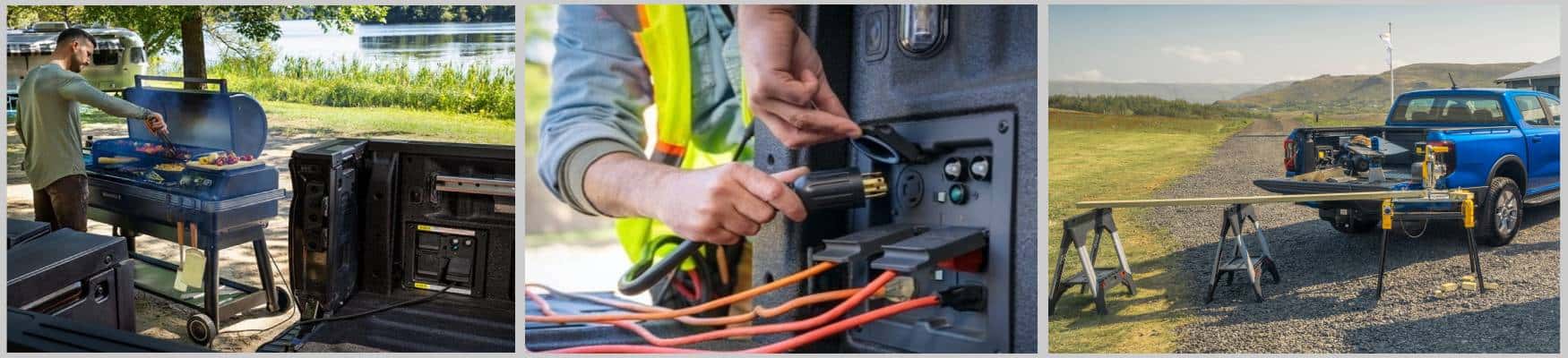
Construction sites across the Inland Northwest benefit from onboard truck power. Pull your truck to your work location, activate the system, and start running tools directly from the bed outlets.
The 7.2 kW configuration handles professional-grade equipment with ease. Here’s what common tools require:
- Circular saw: 1,000W
- Hammer drill: 1,200W
- Flood lights: 800W
- Gang battery charger: 1,200W
- Air compressor: 1,000W
Quick tip for power planning: Add up your devices’ wattage to stay under your system’s limit. For example, a circular saw (1,000W) plus flood lights (800W) equals 1,800W total draw. Check this against your kW capacity (7.2 kW = 7,200W available).
Multiple tools can run simultaneously as long as their combined demand stays below your total capacity. The 7.2 kW system provides 7,200 watts, so you could operate several tools at once while maintaining a buffer for motor startup surges.
Regional contractors find numerous applications. Framing crews working in Liberty Lake power nail guns through compressors plugged into truck beds. Electricians in Spokane Valley run drills and saws without searching for temporary power. Landscaping teams appreciate the quiet operation in noise-sensitive neighborhoods.
Remote locations benefit most. When working on properties near Pullman or Coeur d’Alene without established electrical service, your truck becomes the entire power infrastructure for pumps, mixing equipment, cutting tools, and lighting.
Using Pro Power Onboard for Camping and Weekend Trips
Pro Power transforms camping experiences throughout Idaho and Washington’s wilderness areas. String LED lights around your campsite, power a portable refrigerator for multi-day trips, or run a coffee maker for morning convenience.
Electric cooking equipment operates from your outlets, which proves especially valuable during fire bans when open flames aren’t permitted. Laptops, portable speakers, phones, and drone battery packs all stay charged throughout your trip.
Common camping gear power requirements include:
- Mini-fridge: 400W
- Portable speakers: 400W
- Blender: 200W
- Electric heater: 600W
- TV: 400W
- Camp lights/projector: 500-800W
At Riverside State Park, Lake Coeur d’Alene, Priest Lake, and Farragut State Park, F-150 owners run portable air conditioning units during summer heat waves and electric heaters during cool spring and fall nights. Photography equipment, medical devices like CPAP machines, and entertainment systems all benefit from unlimited charging capability.
Best Practices for Planning and Staying Safe
Start by listing every device you intend to power, then research each item’s wattage requirements. This information usually appears on labels or in owner’s manuals. Add up the watts for everything you might run simultaneously to verify you stay within your system’s capacity. Remember that motors often draw extra power during startup, so build in a safety margin.
Calculate both peak and average loads. A coffee maker might pull 1,000 watts but only runs for ten minutes. A laptop charger draws 65 watts continuously for hours. Understanding these patterns lets you sequence usage effectively, running high-draw tools one at a time rather than simultaneously.
Cord Placement and Safety Tips
Use cords rated for outdoor use when running power from your truck bed. These weather-resistant cords withstand moisture, temperature extremes, and physical wear. Check the cord’s gauge rating (20A rated for 120V outlets) to ensure it can handle your device’s amperage without overheating.
Route cords away from traffic paths, sharp edges, exhaust, and moving parts. At job sites, elevated cord runs prevent tripping hazards and protect cables from vehicle tires. Secure loose cord sections with stakes or weights to prevent wind from moving them into dangerous positions.
Inspect cords and outlets regularly for damage. Frayed insulation, bent prongs, or cracked housings create fire and shock risks. Replace damaged equipment immediately. Keep connections dry whenever possible, and always unplug devices when finished using them.
Ensure proper ventilation when running the system. Never operate your truck in enclosed spaces, and keep cords away from exhaust areas and wet conditions.
Explore F-150 Trucks with Pro Power Onboard at Wendle Ford
Finding the right F-150 equipped with Pro Power Onboard starts with visiting Wendle Ford at 9000 N Division St in Spokane. Our team understands how different power configurations match various work and recreation needs. Whether you need the standard 2.0 kW setup for basic applications or the robust 7.2 kW system for professional use, our inventory includes multiple options.
Family-owned and operating since 1943, we bring decades of experience helping Inland Northwest residents select vehicles that truly fit their lifestyles. We can demonstrate the system’s operation, show you outlet locations, and explain monitoring features so you leave confident in your purchase.
Contact us at 509-581-5268 or stop by to experience firsthand how this innovative system transforms your F-150 into a mobile power solution that eliminates limitations wherever Washington and Idaho roads take you.
Always consult your owner’s manual for model-specific details and safety guidelines.
Ford F-150 Pro Power Onboard FAQs
What does Ford Pro Power Onboard do on a Ford F-150?
Ford Pro Power Onboard turns a Ford F-150 into a mobile power source that provides household-style electricity through built-in outlets. The system draws power from the truck’s powertrain and manages output so tools, electronics, and camping gear can run without a separate portable generator.
What Pro Power Onboard output levels are available?
Ford Pro Power Onboard is offered in 2.0 kW, 2.4 kW, and 7.2 kW configurations. The lower outputs support lighter needs like charging devices and running small electronics, while the 7.2 kW setup supports higher-draw equipment and multiple devices at the same time when total demand stays within capacity.
Which Ford F-150 configurations can include Pro Power Onboard?
Availability depends on the engine and equipment. The 2.0 kW system is optional on select gas-engine configurations, the 2.4 kW system is standard on models equipped with the 3.5L PowerBoost Full Hybrid V6, and the 7.2 kW system is optional on PowerBoost hybrid models.
Where are the Pro Power Onboard outlets located?
Many F-150 models include 120V outlets in the cabin for small electronics, and the truck bed includes weatherproof outlet panels designed for tools and larger gear. The 7.2 kW configuration adds more 120V outlets and includes a 240V outlet in the bed for higher-draw needs.
How is Pro Power Onboard turned on and monitored?
Pro Power Onboard can be activated through the touchscreen menu, a dedicated button location that varies by configuration, or through the FordPass app on supported vehicles. Power usage and available capacity can be monitored in the instrument cluster, and remote monitoring is available through the app when equipped.
What safety and power-planning practices help prevent overloads?
Power planning works best when the wattage for devices expected to run at the same time is added up and kept below the system’s maximum output, with extra buffer for motor startup surges. Outdoor-rated extension cords with appropriate amperage capacity should be used, cords should be routed away from traffic paths and exhaust heat, and damaged cords or plugs should be replaced immediately. The owner’s manual should be followed for model-specific operating guidance and safety details.
0 comment(s) so far on How to Use Ford Pro Power Onboard for Work or Camping