

What is Ford Trail Control and How Do You Use It?
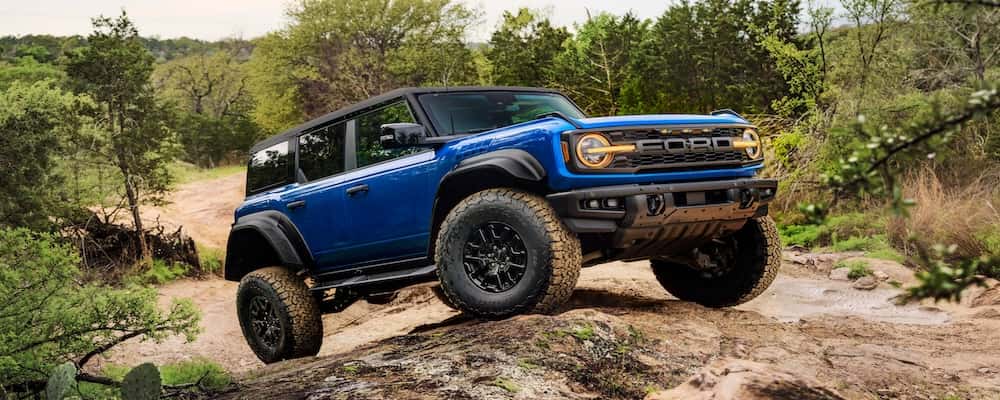
Coordinating throttle, braking, and steering when tackling rocky terrain or steep descents is a challenge. Ford Trail Control simplifies off-road driving by acting as a low-speed cruise control system, allowing you to maintain a set speed while focusing on steering. If you enjoy off-the-beaten-path adventures in the Inland Northwest, this innovative driver-assistance technology is a game changer. Our team at Wendle Ford in Spokane, Washington, put together this guide to Trail Control, including step-by-step instructions on how to use it.
Ford Trail Control: Your Off-Road Driving Assistant
Trail Control acts as a low-speed, off-road cruise control system. It manages acceleration and braking on challenging terrain, allowing you to keep both hands on the steering wheel for better control and navigation, and maintains a steady pace over obstacles, such as rocks and sand. Whether you’re a novice or an experienced driver, Trail Control makes off-roading easier.
Unlike standard cruise control designed for highway driving, Ford Trail Control operates at slow speeds between 1 mph and 20 mph in various two- and four-wheel-drive (4WD) high-range modes, with a lower limit of 1-10 mph in 4WD low range and up to 5 mph in reverse. You can adjust the speed in 1-mph increments, depending on the transfer case setting, allowing for precise management of the vehicle’s movements. Trail Control eliminates the need for constant pedal adjustment, improving handling and confidence on demanding terrains, such as rocks, deep sand, or snow.
How Ford Trail Control Works
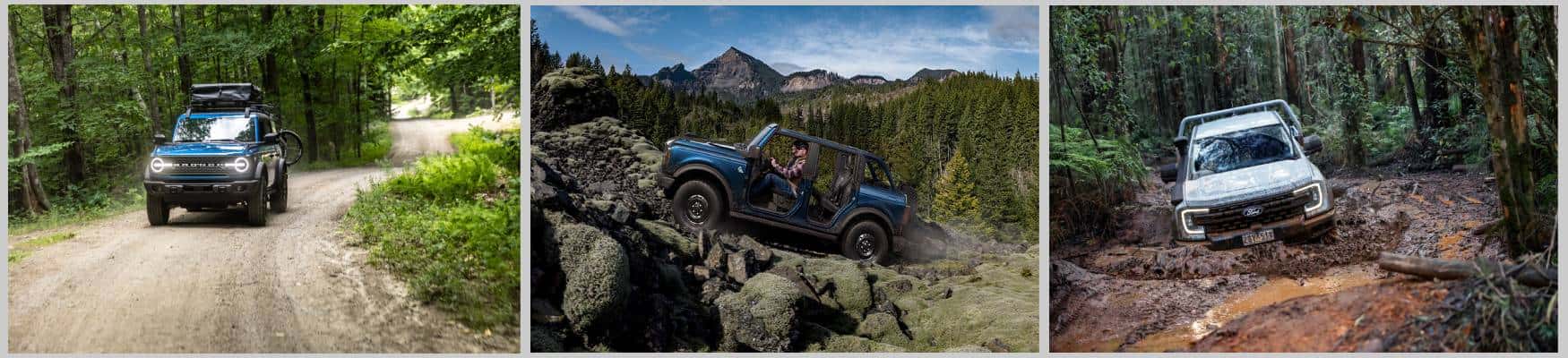
Ford Trail Control is based on advanced, ground-breaking technology. The system uses data from multiple sensors, analyzing it more than 10,000 times per second to automatically adjust throttle and braking inputs, allowing the vehicle to react instantly to changing off-road conditions. It works in conjunction with 4WD High (or 2WD High) and 4WD Low modes, allowing you to maintain set speeds on various terrains by automatically controlling acceleration and braking for each wheel. Trail Control also functions in reverse, assisting when you need to back up or reposition on tricky trails.
This system also works with the Ford Bronco and Bronco Sport’s Goes Over Any Type of Terrain, or G.O.A.T., modes. Settings, which vary by trim level, include Normal, Eco, Sport, Slippery, and Sand, with additional modes, such as Mud/Ruts, Rock Crawl, Baja, and Tow-Haul available on higher variants. The terrain management system fine-tunes the vehicle’s behavior by adjusting electronic parameters, such as throttle and powertrain responsiveness, suspension settings, and differential locking, to optimize performance, fuel efficiency, or traction for different surfaces.
Step-By-Step Guide: How To Use Ford Trail Control
Using Ford Trail Control is straightforward. To activate the system, press the Trail Control button, typically located on the center console or the G.O.A.T. Modes dial. Ensure your vehicle is in an appropriate gear, such as Drive, Neutral, or Reverse (not Park), and release the electric parking brake. Use the steering wheel’s Set+ and Set- buttons to set your desired speed. Once activated, take your feet off the gas and brake pedals. The system will automatically regulate throttle and braking inputs to maintain your set speed and control the vehicle’s movement over challenging terrain, allowing you to concentrate on steering.
You can override Trail Control at any time by pressing the brake or gas pedal. To turn the system off, press the activation button on the center console again. To use the system effectively, don’t fight it. If you apply the brake or accelerator pedal while Trail Control is active, it’s interpreted as an attempt to override it, which can lead to confusion or a loss of speed control.
Ford Trail Control vs. Competitors
Ford Trail Control distinguishes itself from competitor systems by offering a wider speed range and smoother operation, allowing it to be used on more diverse terrain. While competitor systems, such as Toyota Tacoma Crawl Control, are often restricted to 4WD Low, Trail Control operates in 4WD High or 4WD Low modes, providing more flexibility. The Jeep Wrangler provides other advanced off-road features, but it doesn’t offer an equivalent to Trail Control.
Which Ford Models Feature Trail Control?
Trail Control is available on most of Ford’s most off-road-capable vehicles. It’s a standard feature on all Bronco models with an automatic transmission and specific Ranger and F-150 trims, including the Raptor and Tremor. The system is optional on the Bronco Sport and Tremor versions of the F-250 and F-350 Super Duty trucks.
Experience Ford Trail Control at Wendle Ford Today
Ford’s Trail Control system advances off-road driving technology, making navigating challenging terrain safer and more convenient. It’s easy to operate, increases confidence, and ensures consistent performance in diverse conditions. Whether exploring mountain paths around Spokane or Inland Northwest forest roads, Trail Control can transform your adventures.
Contact us or visit our Wendle Ford dealership to learn more about this innovative feature and schedule a test-drive. We’ll guide you through our inventory and help you find the Trail Control-equipped truck or SUV that best suits your lifestyle.
Frequently Asked Questions
Should I turn on a G.O.A.T. Mode before using Trail Control?
Yes. Select the terrain mode first to tailor throttle, traction, and diff behavior, then activate Trail Control to maintain a steady low speed while you focus on steering.
What’s the difference between Trail Control and Hill Descent Control?
Trail Control manages both acceleration and braking at a set low speed on mixed terrain, while Hill Descent Control focuses on controlled downhill braking. Use Trail Control for crawling along a trail; use Hill Descent for long, steep downhills.
Can I use locking differentials with Trail Control?
Yes. If equipped, you can engage lockers for extra traction and Trail Control will still regulate speed. Be aware that locked axles can reduce turning radius and increase understeer on tight corners.
Why do I hear ABS or brake noises when Trail Control is on?
Pulsing and clicking noises are normal. The system modulates individual brakes to maintain your set speed and traction, especially on rocks, sand, or loose descents.
Can Trail Control overheat my brakes on long descents?
It can if used continuously on extended downhills. Take breaks to let the brakes cool, downshift or use 4WD Low for more engine braking, and switch to Hill Descent Control when appropriate.
Will throttle or brake input cancel Trail Control?
Pressing the pedals temporarily overrides the system without turning it off. Release the pedals to resume the set speed, or press the Trail Control button to deactivate it completely.
0 comment(s) so far on What is Ford Trail Control and How Do You Use It?