

What’s the Difference Between 4A, 4H, and 4L in Ford Off-Road Models?
Driving through Spokane’s unpredictable winter mornings or navigating backroads toward Coeur d’Alene requires more than just all-terrain tires. Modern Ford trucks and SUVs in our new Ford lineup come equipped with sophisticated 4WD systems offering three distinct drive modes: 4A, 4H, and 4L. Each serves a specific purpose, and knowing which one to engage can make the difference between confident control and getting stuck. Countless drivers at Wendle Ford own capable Ford 4WD vehicles but aren’t quite sure when to switch modes or how each setting works.
What 4A, 4H, and 4L Actually Mean for Spokane Drivers
The “4” indicates four-wheel drive is engaged, distributing power to all four wheels rather than just the rear. The letters describe how that power gets delivered.
4A stands for Four-Wheel Auto, an intelligent system that monitors traction in real time. Sensors detect wheel slip and 4A automatically sends power to the front wheels. Once grip returns, it shifts back to two-wheel drive for better fuel efficiency. This mode operates at highway speeds and handles the thinking for you.
4H means Four-Wheel High, a locked setting that constantly powers all four wheels. Unlike 4A’s automatic adjustments, 4H provides continuous four-wheel traction at normal highway speeds, delivering maximum grip on consistently challenging surfaces like icy I-90 or muddy trails.
4L represents Four-Wheel Low, multiplying your engine’s torque through lower gearing for tremendous pulling power at crawling speeds. The difference between 4L vs 4H becomes obvious when you need to inch up a steep, rocky grade or power through deep slush at 3 mph.
4A (Four-Wheel Auto): Your Go-To Setting for Variable Conditions
The 4A auto mode handles Inland Northwest driving perfectly. Spokane weather shifts faster than your morning commute (one minute you’re on dry pavement near downtown, the next you’re crossing snow-covered bridges over the Spokane River).
Advanced sensors monitor wheel speed dozens of times per second. When rear wheels start spinning faster than the fronts, the system engages a clutch that routes power forward. Once all four wheels regain equal speed, 4A releases and returns to two-wheel drive. You get instant traction when conditions deteriorate without fumbling for controls, while maintaining better fuel economy than leaving 4WD locked on permanently.
Best Uses for 4A on Inland Northwest Roads
Early morning winter commutes perfectly demonstrate 4A’s capabilities. Roads freeze overnight, then thaw in patches as the sun rises. You encounter icy shadows under overpasses, wet stretches where road crews treated with salt, and dry sections exposed to full sun. Rather than guessing which setting you need every quarter mile, 4A adjusts automatically.
Light snow that hasn’t been plowed responds well to 4A. The system provides enough traction to maintain momentum without overworking your drivetrain. Rain-soaked highways work well too, especially when temperatures hover near freezing.
We recommend 4A as your default winter setting in Spokane from November through March unless you need 4H’s continuous power or 4L’s extreme torque.
4H (Four-Wheel High): Confident Control When Conditions Get Tough
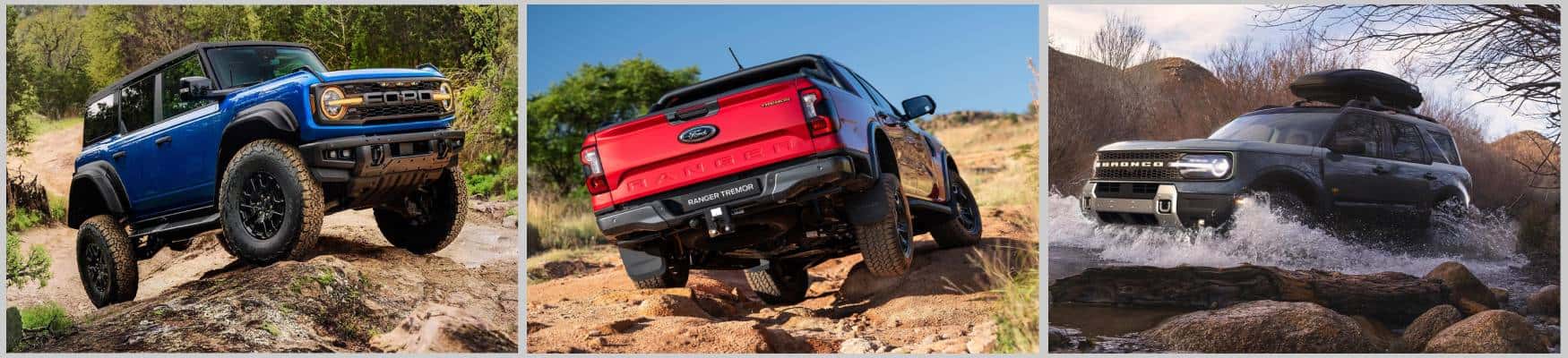
When road conditions stay consistently terrible (deep snow accumulating faster than plows can clear it, freezing rain creating a skating rink, or backroads turning into rutted mud) you need more than 4A’s intermittent help.
4H engages continuous four-wheel drive power through the transfer case, either by mechanically locking the front and rear driveshafts (on ESOF-equipped models) or by fully engaging an electronically controlled clutch pack (on Advanced 4×4 models), maximizing available traction. Power flows continuously to every wheel, maximizing available traction. Unlike 4L, you maintain normal highway speeds, making 4H ideal for commuting or traveling in sustained bad weather.
When Spokane Drivers Should Engage 4H
Engage 4H when snow accumulation reaches four inches or more and roads haven’t been properly plowed. The continuous power prevents spinning out when accelerating from stops or climbing moderate grades. This shows up most often on Spokane’s hillier neighborhoods where steep residential streets ice over quickly.
Deep gravel roads benefit from 4H’s locked traction. Heading toward recreation areas in Eastern Washington where maintained pavement ends? Switch to 4H before the surface gets loose. The system prevents fishtailing and maintains steering control.
Icy highways represent the classic 4H scenario. When morning temperatures drop and moisture freezes across entire stretches of road, 4A might cycle on and off too frequently. Switching to 4H provides consistent grip for steady speeds and safer braking.
You can engage 4H while driving. Simply rotate your 4WD selector to the 4H position at any speed. The transfer case shifts smoothly without drama.
Important: Ford advises against using 4H on dry, hard-surfaced roads, as doing so can cause excessive noise, increased tire wear, and potential drivetrain damage. Use 4H only on consistently slippery or loose surfaces.
4L (Four-Wheel Low): Maximum Torque for Serious Challenges
Most Spokane drivers will rarely need 4L, but when conditions get genuinely extreme, nothing else works. This mode transforms your truck into a slow-motion powerhouse by running the transmission through an extra reduction gear in the transfer case, multiplying torque through a 2.64:1 low-range gear reduction. This lets you crawl over boulders, climb impossibly steep grades, or plow through deep mud while barely touching the throttle.
The tradeoff comes in speed. 4L is designed for very slow, low-traction operation, typically crawling speeds well under 25 mph, and should never be used for highway driving. The 3 mph limit applies specifically to engaging or disengaging the mode, not the maximum speed while in it. This isn’t a setting for highway use or even normal off-roading. 4L handles situations where only raw pulling power matters.
Real-World 4L Scenarios in Eastern Washington
Steep, snow-covered grades in the Cascades occasionally demand 4L’s capabilities. When you encounter a hill so steep and slippery that 4H can’t maintain traction, 4L’s torque multiplication lets you inch upward without wheels spinning helplessly.
Rocky trails near rivers or in wilderness areas showcase 4L’s precision. Rather than building momentum to bash over obstacles, you carefully place each wheel using gentle throttle inputs. The tremendous torque moves the truck forward even at idle.
Deep, wet snow or slush that bogs down forward progress calls for 4L. Standard 4H might spin wheels and dig you deeper, but 4L’s multiplication gives you the grunt to push through resistance.
Recovery situations where you’re pulling another vehicle or heavy trailer up a steep boat launch benefit from 4L’s pulling power. The low gearing prevents your engine from straining while locked 4WD distributes power evenly. Our Spokane service team has seen drivetrain stress and component wear from drivers who attempted heavy pulls without engaging 4L, which is specifically designed to handle these loads safely.
How to Switch Between Drive Modes Safely
Ford designed straightforward switching procedures, but following them correctly matters for your drivetrain’s longevity.
Switching between 2WD, 4A, and 4H can happen while driving at any speed. Simply rotate your selector dial or press the appropriate button. You might hear a brief mechanical sound as the transfer case engages.
4L demands precision. You must follow this sequence: slow to 3 mph or less, shift your transmission to Neutral, then move the 4WD selector to 4L. Wait for the indicator light confirming engagement before shifting back into Drive. Attempting to engage 4L at higher speeds can damage the transfer case.
The transfer case physically moves internal gears to create torque multiplication. Those gears need to mesh at similar speeds, which only happens when the vehicle barely moves. Trying to force engagement while rolling at 20 mph can strip gears or break components.
Common Switching Mistakes to Avoid
Never engage 4L at highway speeds. We’ve seen damaged transfer cases from drivers who panicked in sudden snowstorms and yanked the selector into 4L without slowing down. The repair bills exceed several thousand dollars.
Don’t forget to exit 4L when returning to normal roads. Driving on dry pavement in 4L creates drivetrain binding because locked front and rear axles can’t accommodate the different speeds required in turns. This binding strains components and makes handling dangerously unpredictable.
Avoid using 4A on sustained, rough off-road terrain. The automatic clutch pack that engages 4A’s front wheels generates heat through friction. Extended off-road use where the system constantly cycles can overheat that clutch. Once you commit to serious trail riding, switch to 4H’s locked engagement.
Don’t use 4WD on dry pavement just because you can. Continuous use creates unnecessary wear. Save 4WD for actual low-traction conditions.
What You Should Feel When Each Mode Is Working Correctly
Understanding the sensory feedback from each mode helps you recognize proper operation and catch potential problems early.
4A: Smooth and Nearly Invisible
4A operates almost invisibly when working correctly. You might notice slightly firmer handling when accelerating from stops on slippery surfaces as power routes forward. There shouldn’t be any clunking, grinding, or harsh transitions. If you feel jerky engagement or hear loud mechanical noises, something needs attention.
4H: Planted and Secure
4H provides a noticeably planted, secure feeling through corners and over rough surfaces. The truck tracks straighter with less tendency for the rear to slide out. You might feel slightly increased steering effort. At low speeds with tight turning, you may sense mild binding that disappears once rolling straight (this represents normal behavior from the locked axles).
4L: A Complete Change in Character
4L transforms your truck’s character completely. The engine runs louder at higher RPM for any given speed. You feel tremendous pulling power with light throttle inputs. If 4L doesn’t provide dramatically increased low-speed torque, the system may not have fully engaged.
Warning Signs Across All Modes
Warning signs include grinding noises during mode changes, vibration at highway speeds in 4H, or difficulty engaging 4L even when following proper procedures. These symptoms suggest mechanical issues requiring professional diagnosis.
Experience Ford’s 4WD Capability at Wendle Ford
We encourage Spokane drivers to contact our team and schedule a demonstration covering real-world 4WD operation. Our sales staff includes experienced off-road enthusiasts who regularly use these systems in Inland Northwest conditions. They can explain mode selection while you’re behind the wheel, showing you the switching procedures and letting you feel the differences firsthand.
Whether you’re shopping for a Bronco, F-150, Ranger, Explorer, or Expedition, or have questions about your current vehicle’s capabilities, we’re here to help. Visit us at 9000 N Division St or call 509-581-5268 to discuss how Ford’s 4A, 4H, and 4L modes match your Spokane driving needs.
Ford 4WD FAQs
Is Ford 4A the same thing as all-wheel drive?
Not exactly. Ford 4A is part of a four-wheel drive system, but it can behave similarly to all-wheel drive in changing conditions by automatically sending power to the front wheels when needed. The difference is that 4A is still built into a selectable 4WD setup that may also include 4H and 4L for more demanding situations.
Does four-wheel drive help you stop faster in snow or ice?
No. Four-wheel drive helps your Ford get moving and maintain traction, but it does not shorten braking distances on slippery roads. Spokane drivers still need to leave extra stopping space, slow down early, and make sure their tires are in good condition during winter weather.
Why does my Ford feel tight or resistant when turning in 4H?
That feeling can happen because 4H keeps power going to both axles, which can create drivetrain binding on surfaces with good traction. You may notice it more in parking lots, tight corners, or dry pavement. If the road is no longer slick or loose, it is usually a sign that you should switch back to a more appropriate mode.
Do I still need good tires if my Ford has 4WD?
Yes. Your 4WD system can only work with the traction your tires are able to provide. Worn tread, uneven tire pressure, or using the wrong tires for the season can limit how well 4A, 4H, or 4L performs in snow, slush, mud, or gravel.
Can using the wrong 4WD mode cause extra wear?
It can. Using a heavier-duty mode when conditions do not call for it may put unnecessary stress on drivetrain components and increase tire wear. Choosing the right setting for the surface helps your Ford perform the way it should while reducing avoidable strain over time.
0 comment(s) so far on What’s the Difference Between 4A, 4H, and 4L in Ford Off-Road Models?