

Which Ford SUVs Have the Most Ground Clearance for Off-Roading Around Spokane?
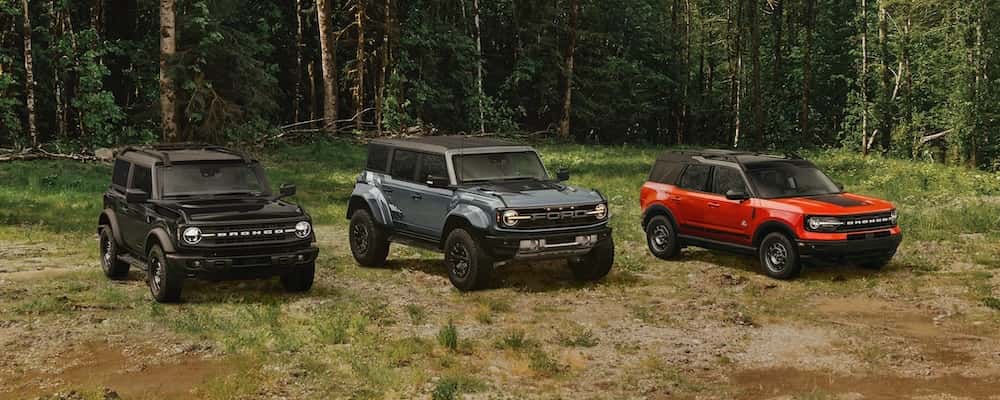
Ground clearance can make the difference between clearing a rut and scraping the underside of an SUV, especially on the forest roads, rocky approaches, and snow-covered routes found around the Inland Northwest. The 2026 Ford SUV lineup includes several models built for these conditions, but their capabilities vary considerably. Some are intended for technical off-roading, while others are better suited to gravel roads, remote campsites, and rough trailhead access.
The 2026 Ford Bronco offers the most ground clearance in the lineup, reaching 13.1 inches in Bronco Raptor form. The Ford Expedition Tremor follows with 10.6 inches, while the Bronco Sport and Explorer Tremor offer more compact or family-oriented alternatives. Drivers comparing these models can start with Wendle Ford’s new Ford SUV inventory in Spokane.
Ford SUV Ground Clearance at a Glance
Ground-clearance measurements can change based on trim, tire size, drivetrain, and optional equipment. The following chart compares the highest-clearance configurations of the Ford SUVs most relevant to off-road driving around Spokane.
Ford Bronco: The Most Ground Clearance in the Ford SUV Lineup
The 2026 Ford Bronco is the clear leader when maximum ground clearance is the priority. The Bronco Raptor reaches 13.1 inches with its 37-inch tires, providing considerably more room beneath the vehicle than a typical crossover. Other Bronco configurations equipped with available 35-inch tires can offer up to 11.6 inches. Standard Bronco ground clearance starts closer to 8.3 or 8.4 inches, so selecting the right trim, package, and tire size is important.
Clearance is only one part of the Bronco’s advantage. It uses a body-on-frame platform, standard four-wheel drive, and available front and rear locking differentials. Depending on configuration, drivers can also get low-range gearing, underbody protection, Trail Turn Assist, and terrain-specific G.O.A.T. Modes. These features make the Bronco the strongest Ford SUV choice for rocky climbs, deep ruts, uneven breakovers, and more demanding routes beyond maintained forest roads.
The Bronco’s shorter available two-door body can also help on narrow or sharply changing terrain. A shorter wheelbase reduces the likelihood of the center of the vehicle touching the ground as it passes over a ridge. Drivers deciding between the Bronco and its smaller counterpart can review Wendle Ford’s Ford Bronco vs. Bronco Sport comparison.
Ford Expedition Tremor: High Clearance with Three-Row Space
Not every off-road trip involves squeezing between trees or crawling over large rocks. Some Spokane-area families need room for passengers, camping supplies, recovery equipment, and a trailer. The Ford Expedition Tremor provides 10.6 inches of ground clearance while retaining the passenger and cargo capacity expected from a full-size three-row SUV.
The 2026 Expedition Tremor uses standard four-wheel drive and rides on 33-inch all-terrain tires. It also has a 28.2-degree approach angle, 22.4-degree breakover angle, and 24.3-degree departure angle. These measurements help it approach inclines, pass over uneven crests, and descend without contacting the terrain. Protective equipment and an off-road-tuned suspension further support its role on rough access roads.
Its size remains an important consideration. The Expedition Tremor has more ground clearance than the Bronco Sport or Explorer Tremor, but it is also longer and wider. That makes it a strong fit for open forest roads, snow, campsites, and towing, while a Bronco may be easier to place on narrow or highly technical routes.
Ford Bronco Sport: Compact Dimensions and Useful Trail Clearance
The 2026 Ford Bronco Sport offers up to 8.8 inches of ground clearance when properly equipped with available all-terrain tires. That is less than the maximum offered by the Bronco and Expedition Tremor, but it is enough to provide useful separation from rocks, ruts, snow, and uneven dirt-road surfaces. Its smaller exterior dimensions can also make it easier to maneuver on wooded routes and around tight trailhead parking areas.
Every Bronco Sport comes with four-wheel drive and G.O.A.T. Modes, while off-road-focused configurations add equipment intended for more difficult conditions. Available features include additional underbody protection, trail-oriented camera views, an upgraded rear-drive unit, and a twin-clutch rear-drive system. When properly equipped, the Bronco Sport can also ford up to 23.6 inches of water, although drivers should always check depth, current, and the condition of the crossing before proceeding.
The Bronco Sport makes the most sense for drivers who want one SUV for Division Street commutes, winter weather, and weekend trips into the Inland Northwest. It does not have the Bronco’s body-on-frame construction or low-range transfer case, but it requires fewer compromises in daily driving and parking.
Ford Explorer Tremor: A Trail-Capable Three-Row Daily Driver
The 2026 Explorer Tremor raises the Explorer’s minimum running ground clearance to 8.7 inches. For comparison, several other Explorer configurations begin at 7.6 inches, while the Platinum reaches 8.3 inches. The Tremor’s additional height gives drivers more room when passing over ruts, snow, and uneven sections of a forest access road.
The Tremor adds more than extra height to the Ford Explorer. It includes standard Intelligent Four-Wheel Drive, all-terrain tires, an off-road-tuned suspension, underbody protection, and a TORSEN limited-slip rear differential. That differential can direct torque toward the rear wheel with better traction when the surface becomes loose or uneven.
The Explorer Tremor is not intended to match the Bronco Raptor on technical terrain. Its strength is balancing three-row seating, comfortable highway travel, and added capability for camping trips, snowy roads, and rough trailhead access. For many Spokane families, that combination may be more useful throughout the year than maximum ground clearance alone.
Why Ground Clearance Is Only Part of Off-Road Capability
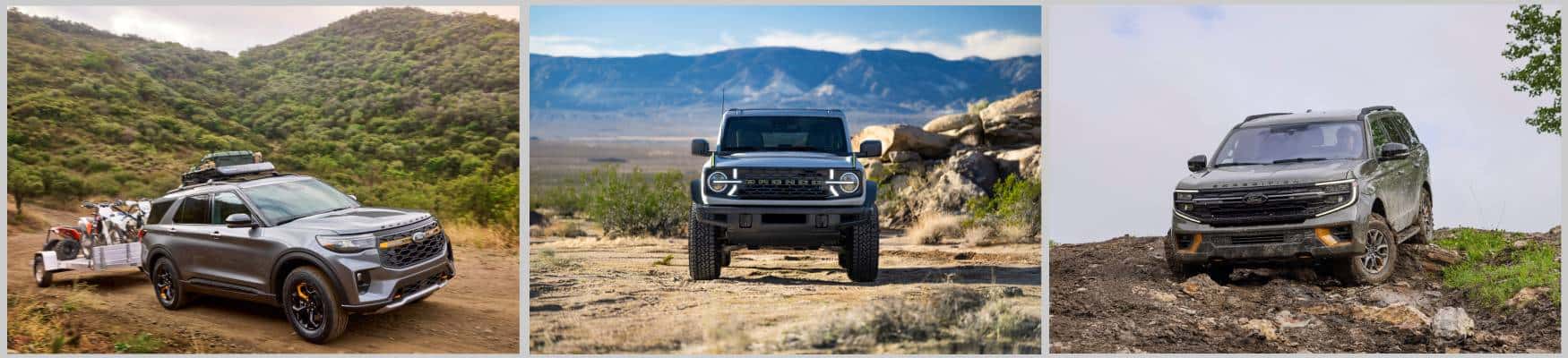
A high-clearance SUV can pass over taller obstacles, but that measurement does not provide a complete picture of how it will perform away from pavement. Drivers should also compare:
- Approach angle: Determines how steeply the SUV can approach an obstacle without contacting the front bumper.
- Breakover angle: Affects whether the center of the vehicle will touch down while crossing a crest.
- Departure angle: Measures how steeply the vehicle can descend without dragging the rear bumper.
- Tire construction and tread: All-terrain tires can improve traction and resistance to damage on loose or sharp surfaces.
- Four-wheel-drive hardware: Low-range gearing and locking differentials provide advantages that ground clearance alone cannot replace.
- Underbody protection: Skid plates help protect vulnerable components if contact does occur.
- Vehicle dimensions: A shorter, narrower SUV may be easier to position on a confined route.
This is why the Expedition Tremor is not automatically more capable on every trail than the lower-clearance Bronco Sport. The Expedition has more space beneath it, but the Bronco Sport’s compact dimensions may be more useful on a narrow route. The Bronco combines high clearance with specialized hardware, giving it the broadest capability range of the four.
How Much Ground Clearance Do Spokane Drivers Need?
There is no single clearance requirement for every trip. Road maintenance, snow depth, recent rainfall, vehicle load, and obstacle shape can all change what is needed. As a general guide, Spokane drivers can think about clearance in the following ranges:
- About 7.5 to 8.5 inches: Suitable for maintained gravel roads, dirt roads, and many developed trailhead approaches.
- About 8.5 to 10 inches: Better suited to rutted forest roads, moderate snow, and rougher campsite access.
- More than 10 inches: Helpful for larger rocks, deeper ruts, uneven crests, and more demanding recreational off-roading.
Tires can be just as important as the measurement beneath the vehicle. Worn highway tires may struggle on mud or loose gravel even when the SUV has substantial clearance. Wendle Ford’s tire center in Spokane can help drivers compare replacement tires based on vehicle fitment and seasonal use. Additional cargo-management and vehicle-protection equipment is also available through Ford Accessories.
Planning an Off-Road Trip Around Spokane
Colville National Forest includes Green Dot roads, Jeep trails, and other designated motorized routes within reach of the Spokane area. Some routes are open to full-size vehicles, while others restrict access based on vehicle class or width. Drivers should check the current Motor Vehicle Use Map before leaving because third-party navigation apps may not reflect seasonal restrictions, closures, or permitted vehicle types.
Conditions can also change quickly across the region. A road that is manageable during a dry week may develop deep mud, washouts, standing water, or fallen trees after a storm. Snow can remain at higher elevations after lower roads have cleared. Offline maps, food, water, warm clothing, a first-aid kit, recovery equipment, basic tools, and a properly inflated spare tire are sensible additions when traveling beyond reliable cell coverage.
Which Ford SUV Is Best for Off-Roading Around Spokane?
The Ford Bronco Raptor has the most ground clearance at 13.1 inches, while other properly equipped Bronco models can provide up to 11.6 inches. This makes the Bronco the strongest overall choice for drivers planning more difficult off-road trips. The Expedition Tremor is better suited to buyers who need high clearance, three-row space, and towing capability in the same vehicle.
The Bronco Sport is the most practical compact option for everyday driving and weekend forest roads. The Explorer Tremor fills a similar role for families that need a third row and more interior room. Drivers can compare current availability through Wendle Ford’s Ford research hub or visit our dealership at 9000 N Division Street in Spokane. Our team can help you compare clearance, tires, four-wheel-drive systems, and passenger space before selecting the right SUV for your plans.
Frequently Asked Questions
Which Ford SUV has the highest ground clearance?
The 2026 Ford Bronco Raptor has the highest ground clearance in the current Ford SUV lineup at up to 13.1 inches. Other Bronco configurations equipped with available 35-inch tires can offer up to 11.6 inches.
How much ground clearance does the Ford Bronco Sport have?
The 2026 Ford Bronco Sport provides up to 8.8 inches of ground clearance when equipped with available all-terrain off-road tires. Exact clearance depends on configuration.
Is the Ford Explorer Tremor suitable for off-roading?
Yes. The 2026 Explorer Tremor has 8.7 inches of ground clearance, standard four-wheel drive, all-terrain tires, underbody protection, and a TORSEN limited-slip rear differential. It is best suited to forest roads, snow, campsites, and moderate off-pavement travel rather than highly technical rock crawling.
Does the Ford Expedition Tremor have more ground clearance than the Bronco?
The Expedition Tremor has 10.6 inches of ground clearance. That is more than a standard Bronco but less than Broncos equipped with available 35-inch tires and the Bronco Raptor. The Expedition’s main advantages are its three-row space, cargo capacity, and towing capability.
Is eight inches of ground clearance enough for forest roads?
Approximately eight inches can be sufficient for many maintained gravel and forest roads, but conditions vary. Deep ruts, large rocks, snow, mud, or washouts may require more clearance, suitable tires, four-wheel drive, and additional underbody protection.
0 comment(s) so far on Which Ford SUVs Have the Most Ground Clearance for Off-Roading Around Spokane?