

2026 Ford Bronco vs 2026 Jeep Wrangler
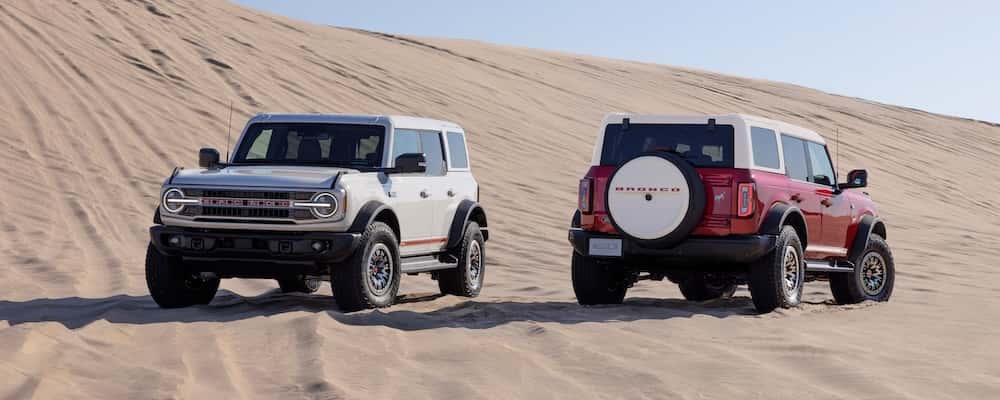
Choosing between the 2026 Ford Bronco and 2026 Jeep Wrangler means deciding how you want to experience off-road driving, daily comfort, and long-term ownership. Both SUVs deliver serious capability, but they differ in technology, refinement, and how they balance trail performance with everyday use.
2026 Ford Bronco vs 2026 Jeep Wrangler: The Ultimate Off-Road Showdown
When Ford brought the Bronco back, it reignited one of the most compelling vehicle rivalries in recent memory. If you’re torn between the 2026 Ford Bronco vs 2026 Jeep Wrangler, you’re weighing two fundamentally different approaches to off-road capability. The Bronco appeals to drivers who want modern technology wrapped in retro styling, while the Wrangler banks on decades of proven trail performance and a devoted following.
For Spokane-area drivers, both vehicles handle winter conditions and mixed terrain confidently, but they get there through distinctly different engineering philosophies. These differing philosophies shape everything from how each vehicle performs off-road to how it feels on the road. What you choose depends on your priorities: modern engineering or battle-tested simplicity.
Powertrain and Engine Options Compared
The engine lineups reveal more differences than similarities. Both offer multiple powertrains balancing trail capability with everyday practicality, but their approaches couldn’t be more different.
Ford Bronco Engine Lineup
Ford starts with a turbocharged 2.3-liter EcoBoost four-cylinder producing between 270-300 horsepower and 300-325 lb-ft of torque. This base engine handles most off-road duties while keeping fuel costs reasonable during daily commutes. The twin-turbocharged 2.7-liter EcoBoost V6 steps up with 310-330 horsepower and 400-415 lb-ft of torque, delivering serious grunt for demanding terrain.
The Bronco Raptor sits at the peak with extreme off-road capability engineered for high-speed desert running that would terrify most SUVs. These engines mate to either a seven-speed manual or Ford’s smooth 10-speed automatic transmission, depending on trim level.
Jeep Wrangler Powertrain Options
Jeep’s lineup starts with a turbocharged 2.0-liter four-cylinder making 270 horsepower and 295 lb-ft of torque, delivering responsive acceleration and decent efficiency. The naturally aspirated 3.6-liter Pentastar V6 produces 285 horsepower and 260 lb-ft of torque with smooth, linear power delivery.
The standout is the 4xe plug-in hybrid, combining a 2.0-liter turbo with electric motors for 375 horsepower and 470 lb-ft of torque. This setup allows silent electric cruising for short trips while maintaining full trail capability. When properly equipped, the Wrangler can tow up to 5,000 lbs, giving it an edge over the Bronco’s standard 3,500-lb capacity.
4×4 Systems and Off-Road Capability
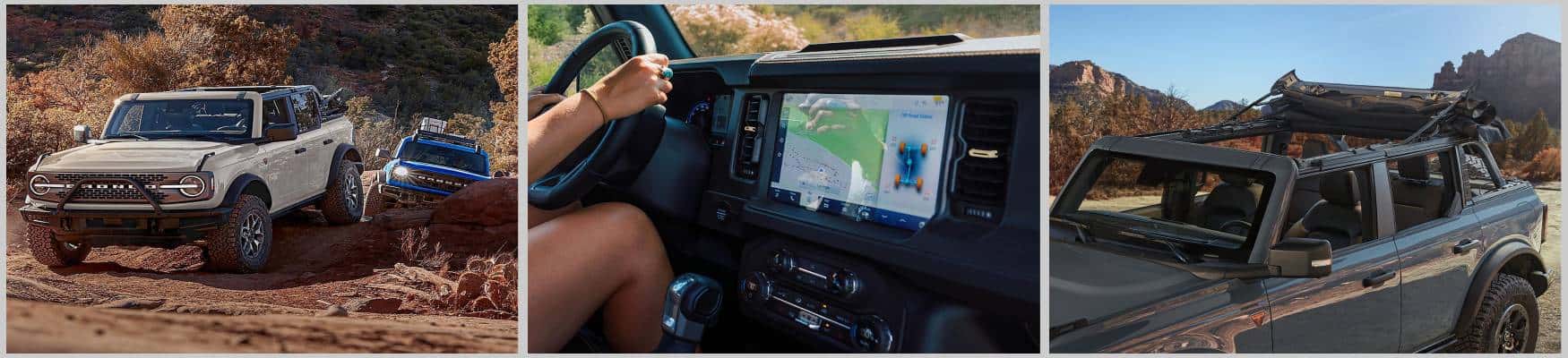
The Bronco’s G.O.A.T. (Goes Over Any Terrain) system provides up to seven selectable drive modes that optimize throttle response, transmission programming, and traction control for sand, mud, rocks, or snow. The Sasquatch package adds 35-inch tires, electronic locking differentials, and a 4.70 final drive ratio for serious crawling capability. Trail Control acts like low-speed cruise control for technical terrain, handling throttle and braking while you focus on steering.
The Bronco’s 33.5-inch water fording depth and up to 13.1 inches of ground clearance (Raptor) exceed the Wrangler’s specifications, making it particularly capable in Eastern Washington’s spring runoff conditions and varied terrain. These advantages matter when crossing streams or navigating deep ruts.
The Wrangler’s Trail Rated badge confirms capability across five areas: traction, water fording, maneuverability, articulation, and ground clearance. Its solid front and rear axles deliver exceptional strength and wheel articulation that independent systems struggle to match. Electronic locking differentials plus aggressive approach and departure angles help the Wrangler tackle obstacles that would strand most vehicles.
What the Wrangler brings is decades of proven durability from weekend warriors and professional guides. Its straightforward design makes field repairs more manageable when you’re far from help. The Bronco counters with fresher technology and thoughtful features that make challenging terrain more approachable for novice off-roaders.
Technology, Infotainment, and Safety Features
The Bronco’s SYNC 4 system operates through a large, responsive touchscreen with wireless Apple CarPlay and Android Auto integration. Wi-Fi hotspot capability and over-the-air updates add features without dealer visits. Dedicated off-road screens display real-time pitch, roll, and steering angle data. The TrailCam system and off-road coaching overlays help you navigate technical sections with greater confidence.
Driver-assistance features include adaptive cruise control, blind-spot monitoring, lane-keeping assist, and automatic emergency braking. The camera array provides multiple angle views, including a front-facing camera that reveals what’s directly ahead when cresting hills or approaching blind obstacles.
The Wrangler’s Uconnect system earns high marks for its logical interface and quick response times. Large icons work well when wearing gloves or dealing with trail vibrations. Off-road navigation includes topographic maps and trail tracking that records your route. Safety technology varies across trim levels, with higher trims offering more advanced features.
Both vehicles feature rugged, washable interiors built for post-adventure cleanup.
Daily Driving Comfort and Spokane Winter Performance
Off-road prowess matters, but most owners rack up serious mileage on regular roads. How these vehicles handle daily duties and winter conditions affects long-term satisfaction.
Ride Quality and Highway Manners
The Wrangler’s solid axle suspension prioritizes off-road toughness over on-road refinement. Recent generations have improved highway behavior dramatically, but the Wrangler still leans more in corners and transmits more pavement irregularities compared to typical SUVs. Highway cruising feels comfortable at reasonable speeds, though wind noise from that boxy shape becomes noticeable above 65 mph.
The Bronco’s independent front suspension provides a more controlled ride on pavement. It corners with less body roll and absorbs bumps more effectively, acting more car-like during daily commutes. This makes it easier to justify as your only vehicle, with minimal cost to off-road performance for most drivers.
Engine refinement favors the Bronco’s turbocharged powertrains, which run quieter and smoother than the Wrangler’s V6 at cruising speeds. Transmission programming works well in both vehicles, with the 10-speed automatic in the Bronco delivering seamless shifts.
Cold Weather Confidence for Spokane Drivers
Spokane winters demand vehicles that fire up reliably, heat quickly, and maintain grip when snow blankets streets and ice glazes mountain passes. The Bronco vs Wrangler comparison reveals capable winter performers with distinct strengths.
The Wrangler shines in deep snow thanks to its ground clearance and aggressive tire options. Solid axles deliver predictable handling when traction vanishes. Improved insulation in recent models helps the cabin stay warm during frigid commutes, with heated seats and steering wheel warming up quickly.
The Bronco matches these essentials while adding sophisticated traction management systems. The G.O.A.T. modes include a dedicated Slippery setting that optimizes grip on snow and ice. Ford’s attention to weatherproofing keeps frigid air out effectively, and the climate system heats the cabin quickly.
Both vehicles benefit from rugged construction and elevated ride height, making snow-filled parking lots and unplowed roads easier to navigate. At Wendle Ford, we see Broncos equipped for Spokane winters handle our conditions exceptionally well, with practical details like wider windshield defroster patterns and mirrors that clear ice faster.
Removable Tops and Open-Air Freedom
Open-air motoring defines both vehicles, transforming ordinary drives into memorable experiences.
The Wrangler practically invented easy top removal, perfecting the system through decades of refinement. Hardtop sections lift off with minimal effort, and door removal requires only basic tools. Freedom Panels over front seats pop out in seconds for quick open-air driving. Modern soft tops fold back quickly, and improved materials resist weather and wind noise. Removable doors create an unmatched connection with your environment.
The Bronco delivers similar versatility with some execution differences. The hardtop includes removable panels over front seats for quick conversion. Complete top removal demands more effort and storage space, making the soft-top the smarter choice for frequent open-air experiences. Door removal takes longer than the Wrangler, though it’s still manageable for motivated owners.
Both vehicles include roll bars and structural reinforcement to maintain safety with tops removed. Two-door models provide better open-air sensation than four-door versions in both lineups.
Schedule Your Bronco Test Drive at Wendle Ford
Choosing between these off-road champions depends on what you value most. The Jeep Wrangler brings proven capability backed by decades of real-world testing and an enthusiastic community. Its straightforward design and massive aftermarket support appeal to serious enthusiasts wanting maximum customization.
The Ford Bronco delivers modern innovation and thoughtful engineering to the off-road segment. Its advanced technology, polished on-road behavior, and contemporary interior attract buyers who want trail capability without sacrificing daily driving comfort. The Bronco’s superior water fording depth (33.5 inches vs 30 inches) and greater ground clearance (up to 13.1 inches vs 10.8 inches) provide measurable advantages in varied terrain, while the independent front suspension offers more refined highway manners for daily commutes.
We’d love to have you experience the 2026 Ford Bronco firsthand at Wendle Ford. Our team has been helping Spokane families find their ideal vehicles since 1943, and we’ll help you determine if the Bronco fits your lifestyle. Contact us or visit us at 9000 N Division St to schedule a test drive today and discover why the Bronco’s combination of modern technology, superior specifications, and everyday refinement makes it the compelling choice for drivers who demand both capability and comfort.
2026 Ford Bronco vs 2026 Jeep Wrangler: FAQs
Which is better for daily driving around Spokane?
If most of your miles are on pavement, the Bronco usually feels more composed thanks to its independent front suspension, reduced body roll, and quieter highway manners. The Wrangler stays comfortable, but its solid-axle setup can transmit more road texture and feel less settled at higher speeds.
Which SUV has better water fording depth and ground clearance?
The Bronco leads for water fording and max clearance, with a 33.5-inch water fording depth and up to 13.1 inches of ground clearance (Raptor). The Wrangler is listed at 30 inches of water fording and up to 10.8 inches of ground clearance (Rubicon).
What engine options are available for each model?
The Bronco offers a 2.3L EcoBoost turbo four-cylinder, an available 2.7L twin-turbo V6, and a Raptor variant for maximum off-road performance. The Wrangler offers a 2.0L turbo four-cylinder, a 3.6L V6, and the 4xe plug-in hybrid for strong torque plus short electric-only driving.
Which one is better for Spokane winter weather?
Both are capable winter SUVs with 4×4 hardware, ground clearance, and rugged builds. The Wrangler’s solid axles and aggressive tire options can feel predictable in deep snow, while the Bronco adds traction-focused tech like selectable G.O.A.T. modes, including a Slippery setting designed for snow and ice.
Can you remove the top and doors on both?
Yes. Both offer removable tops and doors for open-air driving. The Wrangler is typically quicker and more straightforward to convert, while the Bronco delivers similar flexibility, especially with the available soft-top, but full removal can take more time and storage space.
Which one tows more?
The Bronco is rated to tow 3,500 lbs in most configurations, with up to 4,500 lbs on the Bronco Raptor. The Wrangler is commonly rated at 3,500 lbs on many four-door models, with up to 5,000 lbs when properly equipped.
What are the biggest technology differences?
The Bronco emphasizes SYNC 4 with TrailCam views, off-road coaching overlays, and available driver-assist tech like adaptive cruise and lane-keeping on higher trims. The Wrangler’s Uconnect system is known for an intuitive interface, with available trail tracking and topographic-style navigation features depending on trim.
0 comment(s) so far on 2026 Ford Bronco vs 2026 Jeep Wrangler