

How Ford’s Drive Modes Work Across Different Models
Ford’s Drive Mode technology transforms your daily drive by fine-tuning your vehicle settings to match whatever lies ahead. Ford has installed these clever systems in everything from rugged F-150 trucks to compact Mavericks, giving Spokane drivers the tools to conquer city streets and mountain passes with equal confidence. Ford’s Drive Modes adjust throttle response, road grip, and dozens of other settings to make your trips safer, smoother, and more enjoyable — no matter where your adventures take you.
What is a Ford Drive Mode?
Think of Ford Drive Modes as mood settings for your vehicle. Each one adjusts how your car or truck behaves by fine-tuning throttle sensitivity, steering feel, traction control, and suspension settings. Pick a mode, and your Ford will instantly reconfigure multiple systems, giving you the perfect setup for whatever road conditions you’re driving on. It’s like having several different vehicles ready at the push of a button.
Ford built this technology to help drivers feel confident behind the wheel in all conditions. Drive Modes first appeared in the 2016 Ford Focus RS and have spread through Ford’s lineup ever since. The system arrived in F-150 trucks in 2018, bringing the technology to everyday drivers, and recent years have seen additional modes and refinements added across the lineup. For drivers battling icy Spokane winters or climbing steep mountain roads, these modes translate to better control exactly when you need it most.
Complete Guide to Ford’s Drive Modes
Many Ford models include Drive Modes for different situations. Normal Mode balances performance and comfort for daily commuting, keeping systems at factory settings. Eco Mode stretches fuel economy by reducing throttle response — ideal for long drives across Washington. Sport Mode increases gas pedal response and provides tighter steering for winding roads, while Tow/Haul Mode holds gears longer and adjusts the throttle for stable trailer towing. Slippery Mode limits torque to reduce wheel spin — particularly beneficial during Northwest downpours.
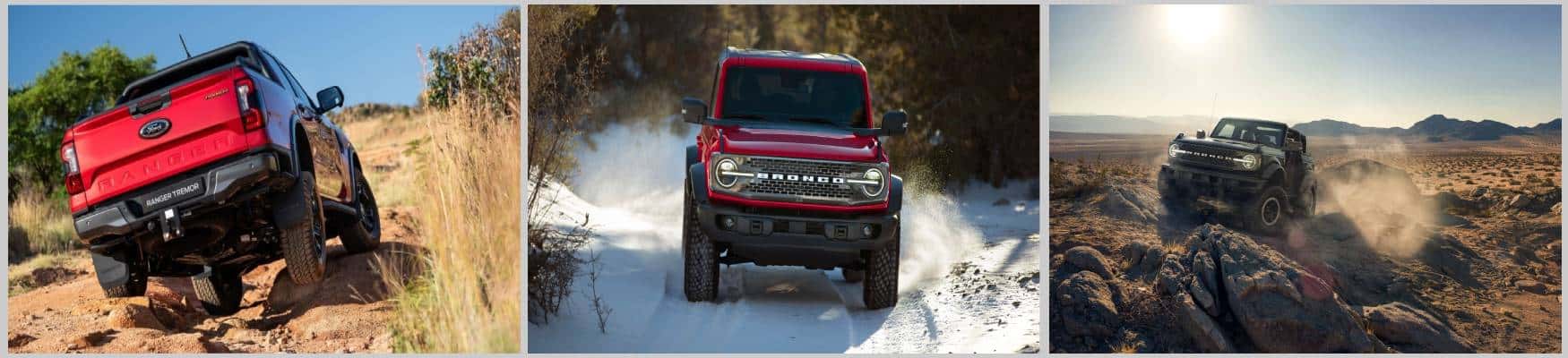
If you enjoy off-roading around Spokane, you’ll particularly appreciate Ford’s terrain-specific modes. Sand/Snow Mode helps you ride across loose surfaces by adjusting throttle and traction systems, while Mud/Ruts Mode engages or optimizes four-wheel drive (4WD) to maintain momentum on muddy, soft, or uneven trails. Additionally, Rock Crawl Mode activates the electronic locking differential for precise control at crawling speeds, and Baja Mode optimizes throttle response, transmission shifts, and suspension settings for high-speed off-road driving.
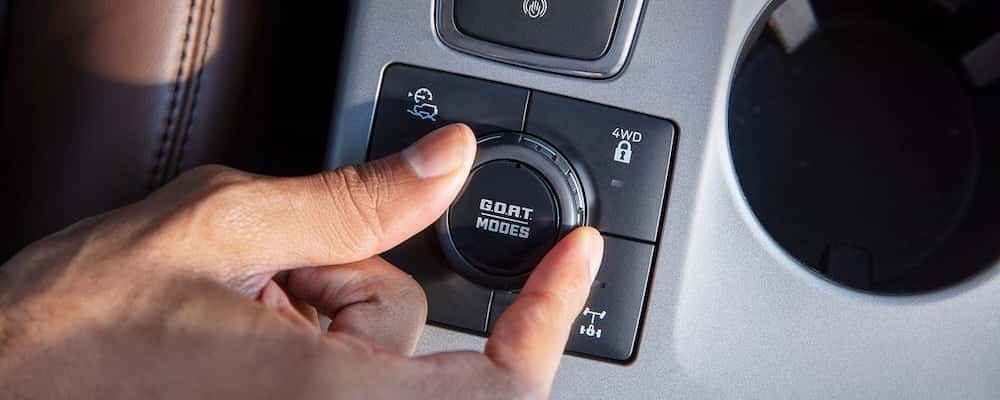
Different Ford vehicles offer a different selection of Drive Modes. For example, the Bronco’s Goes Over Any Type of Terrain (G.O.A.T.) system offers eight modes: Normal, Eco, Sport, Slippery, Sand/Snow, Mud/Ruts, Rock Crawl, and Baja. In comparison, the Ford Explorer’s Drive Modes include Tow/Haul, Slippery, and Trail, as well as Normal, Eco, and Sport. If your Explorer is equipped with Intelligent 4WD, you’ll also have access to Deep Snow/Sand Mode.
How To Use Ford Drive Modes Effectively
Getting the most out of Ford’s Drive Modes means matching them with your driving situation. Your Ford will reset to Normal Mode when turned off, and for everyday Spokane driving, Normal Mode works perfectly for stop-and-go traffic and city streets. However, for road trips across Eastern Washington, Eco Mode boosts mileage by reducing gas pedal sensitivity and shifting gears sooner, and if you need to pull a boat to Lake Coeur d’Alene, Tow/Haul Mode provides better stability through adjusted transmission timing.
Off-roading in the Inland Northwest calls for Sand Mode, which adjusts power delivery to maintain momentum without excessive braking, and when Spokane rainstorms hit, Slippery Mode limits wheel spin. Mud/Ruts Mode maintains momentum while allowing wheels to slip just enough to clear mud from tires, so don’t use it on packed trails where maximum grip matters. In winter, you’ll benefit from Deep Snow/Sand Mode alongside Slippery Mode for icy streets, and Sport Mode makes handling curvy roads effortless.
Depending on your vehicle model, you can change modes using a dial or button near the shifter or through the touch screen. Your vehicle will also display real-time feedback about your chosen mode. Ultimately, choosing the right mode is all about matching your settings to current conditions, helping to make driving safer and more enjoyable year-round.
Advanced Drive Mode Features and Technology
Ford’s advanced Drive Mode features go beyond basic adjustments. Rock Crawl Mode triggers the electronic locking differential while adjusting throttle and transmission for precise low-speed control. The electronic locking differential forces both wheels on an axle to rotate at the same speed, preventing traction loss. You can activate it up to 20 mph, and it automatically disables above 25 mph for safety. On the 2025 Bronco, electronic locking differentials are available on both the front and rear axles, depending on the trim.
Available across multiple models, hill-descent control applies brakes to individual wheels, maintaining your chosen speed up to 20 mph on steep downhills — perfect for tricky mountain roads near Spokane. Electric Ford models, including the F-150 Lightning, offer One-Pedal Drive, letting you accelerate and slow down using just the gas pedal through regenerative braking.
The 2025 Bronco’s Trail Control lets you set a target speed from 1 to 20 mph, automatically handling acceleration and braking so you can focus on steering. Trail Turn Assist shrinks your turning radius by braking the inside rear wheel during tight turns, and Trail One-Pedal Drive combines acceleration and braking into a single pedal for technical driving. Eco Mode offers real-time efficiency feedback, monitoring acceleration, gear shifting, braking, and speed consistency. Meanwhile, Ford Everest models feature a dedicated Off-Road Screen in the SYNC 4 system, showing drivetrain status, steering angle, and pitch and roll angles.
Experience Ford’s Drive Modes at Wendle Ford
Ford’s Drive Mode technology gives you the ability to tailor vehicle performance, improving safety and driver confidence in all conditions. These systems reflect Ford’s commitment to helping drivers adapt to anything — from daily Spokane commutes to mountain adventures.
At Wendle Ford, we bring over 80 years of family-owned service to Spokane, dating back to 1943. If you’re looking for a new, used, or certified preowned Ford with Drive Modes, contact us to set up your test-drive and discover which vehicle fits your lifestyle best.
Contact us or visit our Wendle Ford dealership to learn more about this innovative feature and schedule a test-drive. We’ll guide you through our inventory and help you find the Trail Control-equipped truck or SUV that best suits your lifestyle.
Frequently Asked Questions
Do all Ford vehicles have Drive Modes?
Most newer Ford models include Drive Modes, but the number and type vary by model. Trucks like the F-150 and SUVs such as the Bronco and Explorer feature multiple terrain-specific modes, while smaller vehicles like the Escape or Maverick include everyday settings such as Normal, Eco, and Sport.
What’s the difference between Drive Modes and GOAT Modes?
Drive Modes and G.O.A.T. Modes function similarly, but G.O.A.T. stands for “Goes Over Any Type of Terrain” and is unique to the Ford Bronco lineup. G.O.A.T. Modes include specialized off-road settings like Baja, Mud/Ruts, and Rock Crawl in addition to standard driving modes.
Can I switch Drive Modes while driving?
Yes. You can change modes on the move at moderate speeds using the rotary dial or touchscreen interface. However, low-range modes such as Rock Crawl require the vehicle to be stopped and in Neutral before activation.
Which Drive Mode should I use in snow or ice?
Slippery Mode is ideal for icy or wet Spokane roads because it adjusts throttle response and traction control for maximum grip. Some vehicles also include Deep Snow/Sand Mode for extra traction in deeper snow conditions.
Does Eco Mode really save fuel?
Yes. Eco Mode reduces throttle sensitivity and optimizes transmission shifts for better efficiency during highway drives or steady cruising. It can improve fuel economy by several percent, especially on long Spokane commutes.
Do electric and hybrid Ford models have Drive Modes too?
They do. EVs like the F-150 Lightning and hybrid models such as the Escape Hybrid include modes that optimize range and regenerative braking. Many also feature One-Pedal Drive, allowing you to accelerate and slow down using only the accelerator.
Where can I test Ford Drive Modes near Spokane?
You can experience Ford Drive Modes firsthand by scheduling a test drive at Wendle Ford. Our team can demonstrate how each mode performs on Spokane-area roads and help you find the model that best fits your driving needs.
0 comment(s) so far on How Ford’s Drive Modes Work Across Different Models