

Best Ford F-150 Generations to Buy Used in Spokane
The best Ford F-150 generation to buy used depends on how much technology, towing capability, and remaining service life you want for your budget. For many buyers, the 2015–2020 F-150 is the strongest all-around choice because it combines a lighter aluminum-alloy body with modern engines, useful technology, and broad availability. The 2011–2014 trucks can provide excellent value at a lower price, while a used 2021 or newer F-150 offers newer features such as available Pro Power Onboard and the PowerBoost full hybrid powertrain.
That does not mean every truck from one generation is automatically a good purchase. Maintenance history, engine choice, axle ratio, towing use, mileage, and overall condition matter just as much as the year on the title. This is especially important around Spokane, where used trucks may have spent years handling winter roads, steep grades, job sites, boats, campers, and trips across the Inland Northwest. Buyers ready to compare current options can start with our used truck inventory in Spokane.
Best Used Ford F-150 Generations at a Glance
These generation ranges are a starting point. Equipment can vary significantly within the same model year, so buyers should verify the engine, drivetrain, cab, bed, axle ratio, and factory towing equipment on the individual truck.
2015–2020 F-150: The Best Overall Used Generation
The 13th-generation Ford F-150 is often the best place to begin a used-truck search. Introduced for the 2015 model year, this generation adopted a high-strength steel frame and an aluminum-alloy body that reduced weight compared with the previous truck. The lighter construction helped support payload, performance, and efficiency while retaining the body-on-frame design expected from a full-size pickup.
This generation also gives buyers a wide selection of engines. Depending on the model year, options included naturally aspirated V6 engines, the 2.7-liter EcoBoost V6, the 3.5-liter EcoBoost V6, and the 5.0-liter V8. A 2.7-liter EcoBoost can be a practical match for commuting, household projects, and moderate towing. Buyers who regularly tow a camper, equipment trailer, or boat may want to prioritize a properly equipped 3.5-liter EcoBoost or 5.0-liter V8.
Why the Later 13th-Generation Trucks Stand Out
The 2018–2020 model years sit in a particularly appealing part of the used market. These trucks received updated styling, revised engine availability, and expanded use of Ford’s 10-speed automatic transmission. Depending on trim and equipment, they may also include features such as SYNC 3, Apple CarPlay, Android Auto, blind-spot monitoring, trailer coverage, and Pro Trailer Backup Assist.
Earlier 2015–2017 trucks remain worth considering when the condition and price are right. They may provide many of the generation’s main advantages at a lower cost. As with any used truck, the test drive should include a cold start, several transmission shifts at light and moderate throttle, braking from highway speed, and operation of every available four-wheel-drive mode.
2011–2014 F-150: A Strong Choice for a Lower Budget
The late 12th-generation F-150 remains relevant for buyers who care more about utility than having the newest touchscreen or driver-assistance features. Ford introduced a substantially revised engine lineup for 2011, including the 3.7-liter V6, 5.0-liter V8, 3.5-liter EcoBoost V6, and an available 6.2-liter V8 in select models. These years also used a six-speed automatic transmission rather than the later 10-speed design.
A 2011–2014 F-150 may make sense as a secondary vehicle, work truck, hunting truck, or affordable pickup for home projects. The 5.0-liter V8 is likely to appeal to buyers who prefer naturally aspirated power, while the 3.5-liter EcoBoost provides strong low-speed torque for properly configured towing applications. At this age, however, a documented maintenance history is more meaningful than choosing one engine based solely on reputation.
Age Matters More With These Trucks
Even a clean 2014 F-150 is now more than a decade old. Rubber seals, suspension bushings, cooling-system parts, batteries, wheel bearings, and four-wheel-drive components can deteriorate with age as well as mileage. Check the frame, body mounts, brake lines, hitch area, and suspension mounting points for corrosion or damage. Our guide to buying a used Ford 4×4 in Spokane covers the regional inspection points that deserve extra attention.
Look closely at modifications, too. Oversized tires, suspension lifts, aftermarket engine tuning, and heavy towing accessories can affect how a truck drives and wears. A mostly stock truck with consistent service records may be a better purchase than a lower-mileage example with undocumented modifications.
2021 and Newer F-150: The Best Generation for Technology
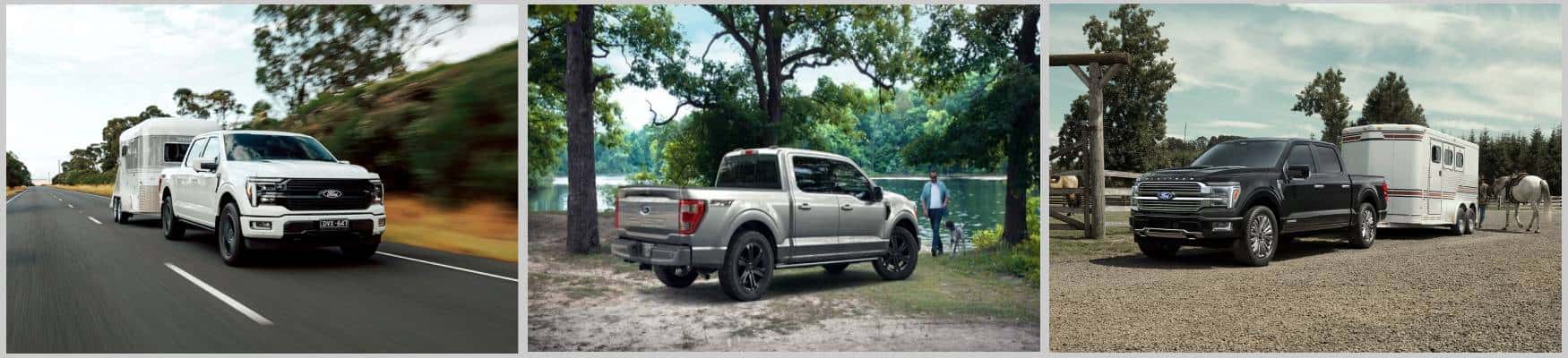
The 14th-generation F-150 arrived for 2021 with an updated cabin, expanded towing technology, and the available 3.5-liter PowerBoost full hybrid V6. PowerBoost models can also offer Pro Power Onboard, which supplies built-in electrical power for tools, camping equipment, electronics, and other devices. Gas-powered trucks may offer Pro Power Onboard as well, although output depends on the powertrain and equipment.
A used 2021–2023 F-150 can provide many current-generation features while avoiding the full price of a new truck. Available equipment may include a larger SYNC 4 touchscreen, wireless smartphone integration, a 360-degree camera, an interior work surface, zone lighting, onboard scales, and more advanced trailer assistance. Exact availability varies by trim, package, and model year.
This generation is a strong choice for drivers who use their truck as both a work vehicle and a daily driver. It also suits Spokane-area owners who want helpful technology for hooking up a trailer, navigating crowded parking areas, or powering equipment away from a conventional outlet. Buyers comparing cab, bed, and capability differences can use our Ford F-150 research hub to review the configurations that may appear in the used market.
Which Used F-150 Engine Should You Choose?
The generation narrows the search, but the engine determines much of the truck’s character. A buyer commuting along Division Street and occasionally hauling home-improvement supplies has different needs than someone pulling a travel trailer over mountain grades. Choosing more engine than necessary can add purchase and operating costs, while choosing too little capability can make towing less comfortable.
- 2.7-liter EcoBoost V6: A good balance for daily driving, responsive acceleration, light hauling, and moderate towing when properly equipped.
- 3.5-liter EcoBoost V6: Well suited to buyers who prioritize torque and higher towing capability. Service records and evidence of proper maintenance are especially important.
- 5.0-liter V8: A natural choice for buyers who prefer V8 power delivery and a more traditional full-size truck feel.
- 3.5-liter PowerBoost full hybrid V6: Available beginning with the 2021 generation and useful for buyers interested in strong torque, newer technology, and available high-output Pro Power Onboard.
Published maximum towing figures do not apply to every F-150 with a particular engine. Capacity changes with the cab, bed, axle ratio, drivetrain, wheelbase, payload rating, and towing package. Review the truck’s door-jamb labels and original equipment information before deciding whether it can safely handle your trailer. Our F-150 towing guide explains why configuration matters.
What to Check Before Buying a Used F-150 in Spokane
Winter conditions, gravel roads, steep terrain, and towing can leave evidence that is easy to miss during a short walkaround. A careful inspection should cover more than paint condition and tire tread. Ask to see the vehicle history report and available service records, then compare the documented maintenance with the truck’s age and mileage.
- Start the engine cold and listen for prolonged rattling, tapping, or unusual turbocharger noise.
- Check for oil, coolant, transmission fluid, and differential leaks.
- Test the transmission at low speed, highway speed, and moderate acceleration.
- Engage the available four-wheel-drive settings and confirm that each mode operates correctly.
- Inspect the frame, suspension, hitch receiver, skid plates, and underbody.
- Look for uneven tire wear that may indicate alignment or suspension concerns.
- Confirm that the trailer brake controller, cameras, outlets, tailgate functions, and driver-assistance features work.
- Use the VIN to check for open recalls and confirm that completed recall repairs are documented.
Recall eligibility applies to individual vehicles, so it should always be checked by VIN. Wendle Ford provides an online Ford recall lookup, and our Ford service center in Spokane can help with inspections, maintenance, and model-specific questions.
So, What Is the Best Used F-150 to Buy?
For the widest range of buyers, a well-maintained 2015–2020 Ford F-150 offers the best overall balance of cost, capability, comfort, and modern features. A 2011–2014 truck may be the better value for buyers working with a tighter budget, while a 2021 or newer F-150 is the stronger choice when current technology, hybrid availability, and Pro Power Onboard are priorities.
The best individual truck is ultimately the one with the right configuration and a history that supports its condition. At Wendle Ford, we can help you compare engine choices, payload ratings, towing equipment, cab sizes, and ownership history without assuming that the newest or most expensive option is automatically the right one. Eligible buyers may also want to compare the inspection and warranty benefits available through Ford Blue Advantage.
Frequently Asked Questions About Used Ford F-150 Generations
Is a newer used F-150 always a better purchase?
No. A newer used F-150 may have more technology and fewer years of use, but condition, maintenance history, equipment, and previous towing demands can matter more than model year. A well-maintained older truck may be a better purchase than a newer truck with neglected service or undisclosed damage.
Does a higher F-150 trim matter more than the model year?
It depends on which features you value. A higher trim may add leather seating, upgraded cameras, driver-assistance technology, or premium audio, but a newer lower trim may have updated powertrains and standard technology. Compare the equipment on the individual truck instead of relying only on the trim badge.
How can I identify an F-150’s factory towing equipment?
Check the original window sticker, vehicle identification number, door-jamb labels, hitch equipment, axle code, and installed trailer controls. Do not assume that every F-150 with the same engine has the same towing capacity because cab, bed, drivetrain, axle ratio, payload rating, and packages can change the limit.
Can a used Ford F-150 qualify for Ford Blue Advantage certification?
Yes. An eligible used Ford F-150 may qualify for Ford Blue Advantage certification when it meets the program’s age, mileage, condition, and inspection requirements. Certification availability depends on the individual vehicle and the applicable certification level.
0 comment(s) so far on Best Ford F-150 Generations to Buy Used in Spokane