

2026 Ford Bronco Sport vs 2026 Subaru Forester
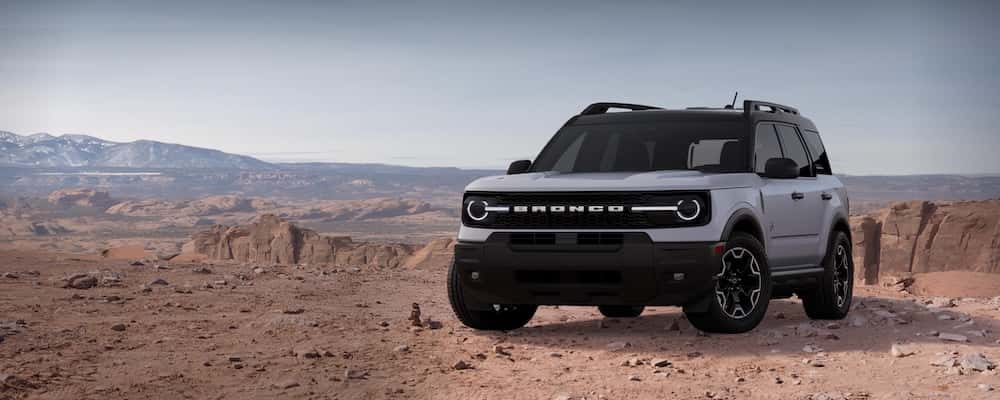
Choosing between the 2026 Ford Bronco Sport and 2026 Subaru Forester comes down to defining what adventure looks like in your world. Both compact SUVs deliver capability and comfort, but they take completely different approaches to get there. At Wendle Ford, we see how the Bronco Sport embraces rugged authenticity, drawing from Ford’s off-road DNA in every design decision. The Forester quietly perfects Subaru’s all-weather formula that’s been winning over drivers for decades.
If you’re dealing with Spokane’s diverse terrain (snowy winter commutes one day, weekend escapes to the Selkirks the next), understanding how these two differ becomes pretty crucial.
Two Adventure-Ready Compact SUVs Built for Spokane Drivers
The Bronco Sport shows up with serious visual presence. That squared-off silhouette and upright stance scream off-road intentions before you even pop the hood. Ford channeled the larger Bronco’s adventurous DNA into something that works in the city, creating a vehicle that looks right at home whether you’re cruising downtown Division Street or heading up a mountain trail near Spokane.
Subaru goes the opposite direction with the Forester. Clean lines and smooth contours prioritize function over flash. The design speaks to practicality rather than making bold statements, delivering real capability through Subaru’s proven Symmetrical All-Wheel Drive system and decades of engineering refinement.
Despite their visual differences, these vehicles match up surprisingly close on size. The Bronco Sport runs slightly shorter overall, making tight parking spots a bit easier to handle. The Forester counters with more height, which translates to better headroom inside.
Ground clearance tells the real story here. The Bronco Sport Badlands Sasquatch gives you 8.7 inches of clearance with approach and departure angles of 31.2 and 27.9 degrees. The Forester Wilderness bumps that up to 9.3 inches of ground clearance, adding upgraded dampers and Yokohama GEOLANDAR all-terrain tires. For Spokane drivers facing icy roads and unpaved Forest Service routes, both deliver enough clearance for realistic adventures.
Everyday Usability and Comfort for Real Life
Daily driving demands more than just capability on paper. The space where you’ll spend your commute and road trips deserves attention.
Passenger Space and Seating Comfort
Both vehicles handle front seat comfort well across different body types. The Bronco Sport puts you noticeably higher up, delivering that commanding view many SUV buyers want. The Forester matches that visibility while offering slightly softer seat cushioning for longer hauls.
Rear passenger space shows differences that matter if you’re hauling family:
| Feature | 2026 Ford Bronco Sport | 2026 Subaru Forester |
| Front-row legroom | 42.4 inches | 43.3 inches |
| Second-row legroom | 36.9 inches | 39.4 inches |
| Rear headroom | Up to 41.7 inches | 40 inches (most trims) |
The Forester wins on rear legroom, which makes a real difference for adults on longer trips. The Bronco Sport fights back with superior rear headroom. You can fit three across the back seat in either vehicle for shorter trips, though neither pretends to be limousine spacious.
Cargo Capacity and Storage Flexibility
Loading weekend gear reveals practical differences:
| Feature | 2026 Ford Bronco Sport | 2026 Subaru Forester |
| Cargo behind rear seats | 32.5 cubic feet | 29.6 cubic feet |
| Maximum cargo (seats folded) | 65.2 cubic feet | 74.4 cubic feet |
The Bronco Sport gives you 2.9 cubic feet more space with rear seats up (perfect for grocery runs and daily hauling). The Forester takes the lead with seats folded, offering 9.2 cubic feet more maximum capacity. The Bronco Sport counters with a more rugged cargo floor that handles muddy boots and wet gear without worry.
Small item storage throughout the cabin shows thoughtful design in both vehicles. The Bronco Sport includes clever touches like rubberized storage bins that match its outdoor focus, built to handle muddy gear and wet items without worry. Door pockets, center console bins, and dashboard cubbies in the Forester seem more thoughtfully sized for phones, water bottles, and daily clutter.
Winter Driving Confidence: All-Wheel Drive Compared
Spokane winters demand capable all-wheel drive systems, not just marketing promises. Both vehicles deliver legitimate four-wheel traction, but the underlying technology works differently.
Subaru’s Symmetrical All-Wheel Drive represents years of refinement. The system powers all four wheels continuously, distributing torque as conditions demand without any driver input. This full-time approach means the Forester never operates as front-wheel drive, staying ready for slippery conditions before they announce themselves. That proactive stance builds confidence during sudden black ice encounters or mid-corner snow patches.
The Bronco Sport uses Ford’s intelligent AWD on most trims, operating primarily in front-wheel drive until slip detection engages the rear axle. Higher trims offer Ford’s more sophisticated Terrain Management System with G.O.A.T. modes (Goes Over Any Type of Terrain), giving drivers specific settings for snow, sand, mud, or normal conditions. The Badlands trim adds twin-clutch rear differential for enhanced traction control.
Both systems handle Spokane’s typical snow and ice well. The Forester’s full-time AWD responds invisibly, making it easier for less experienced drivers to trust. The Bronco Sport’s available G.O.A.T. modes give more engaged drivers additional control over how the vehicle responds, with settings that optimize power delivery and traction management for specific conditions.
Engine Performance and Powertrain Options
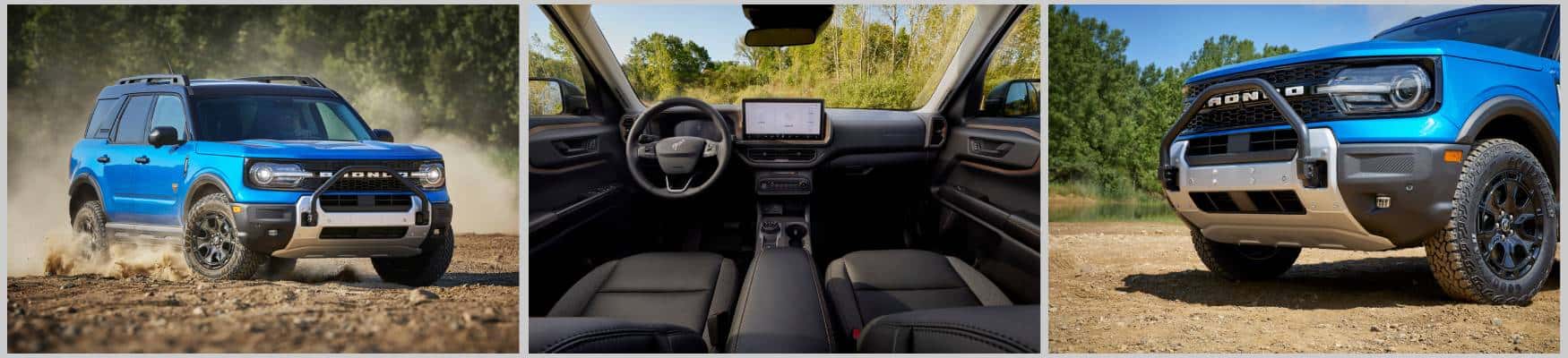
Power delivery and efficiency shape daily driving character more than most specs suggest.
Bronco Sport Power and Capability
Ford offers multiple engine choices across the Bronco Sport lineup:
| Specification | Base 1.5L EcoBoost | Badlands 2.0L EcoBoost |
| Configuration | Turbocharged 3-cylinder | Turbocharged 4-cylinder |
| Horsepower | 180 hp | 250 hp |
| Torque | 200 lb-ft | 280 lb-ft |
| EPA City/Highway | 25 / 30 MPG | 21 / 27 MPG |
| Towing Capacity | — | 2,700 lbs (with Class II package) |
The base engine provides adequate motivation for daily driving while prioritizing fuel economy. The available 2.0L EcoBoost completely changes the Bronco Sport’s character, with power arriving much more eagerly. This engine pairs with Ford’s eight-speed automatic transmission, which shifts smoothly during relaxed driving and responds quickly when you need acceleration.
Towing capacity reaches respectable levels with the larger engine, making the Bronco Sport viable for small trailers, jet skis, or lightweight campers.
Forester Engine and Efficiency
Subaru takes a simpler powertrain approach with a single engine option across all trims:
| Specification | Standard 2.5L |
| Configuration | Naturally aspirated 4-cylinder |
| Horsepower | 180 hp |
| Torque | 178 lb-ft |
| EPA City/Highway | 26 / 33 MPG |
This engine delivers smooth, linear power that feels relaxed rather than urgent. The continuously variable transmission paired with this engine provides excellent fuel economy and smooth operation during casual driving. Subaru has refined this transmission significantly, though spirited acceleration still triggers the characteristic CVT drone as revs climb and hold.
Fuel efficiency tilts toward the Forester during mixed driving, particularly with highway cruising returning up to 33 MPG. The Bronco Sport counters with turbocharged efficiency and the larger engine’s significantly higher torque output.
Driver-Assist Technology and Safety Features
Modern compact SUVs pack impressive safety technology that actively prevents crashes. Both vehicles deliver comprehensive driver-assist packages:
| Feature | 2026 Ford Bronco Sport | 2026 Subaru Forester |
| Lane Keep Assist | Standard | Standard |
| Forward Collision Warning | Standard | Standard with pedestrian detection |
| Automatic Braking | Standard | Standard |
| Blind Spot Warning | Available | Standard in Wilderness |
| Rear Cross-Traffic Alert | Available | Standard in Wilderness |
| Adaptive Cruise Control | Available | Standard in Wilderness |
| Backup Camera | Standard | Standard |
Both include traction control, stability control, tire pressure monitoring, and comprehensive airbag systems covering side, curtain, and knee areas.
Ford’s Co-Pilot360 system works quietly during daily driving, stepping in only when real threats emerge. Lane centering feels natural rather than robotic, gently guiding the vehicle without constant corrections. Subaru’s EyeSight system keeps evolving and tends toward earlier intervention, sometimes warning or applying brakes when Ford’s system stays silent. Neither approach proves inherently better; preference depends on your driving style.
Parking assistance varies by trim level in both vehicles. Available systems include rear cross-traffic alert, parking sensors, and surround-view camera systems. The Bronco Sport offers available front-facing cameras that help position the vehicle precisely on narrow trails.
Off-Road Capability and Trail Performance
Technical Specifications Comparison
| Feature | Bronco Sport Badlands Sasquatch | Forester Wilderness |
| Ground Clearance | 8.7 inches | 9.3 inches |
| Approach Angle | 31.2 degrees | 23.5 degrees |
| Departure Angle | 27.9 degrees | 25.5 degrees |
| Off-Road Systems | G.O.A.T. modes, twin-clutch rear differential, Hill descent control, Trail Turn Assist | X-Mode, upgraded dampers, Yokohama GEOLANDAR all-terrain tires |
| Undercarriage Protection | Skid plates protecting critical components | Standard protection |
Bronco Sport’s Trail-Ready Engineering
Ford engineered the Bronco Sport specifically for off-road competence, particularly in higher trims. The Badlands trim adds features that transform capability on technical trails, letting you navigate obstacles that would stop more street-focused competitors. Trail management features work seamlessly, requiring minimal driver skill to deploy effectively. Shorter overhangs improve approach and departure angles, reducing the risk of grounding on steep terrain transitions.
Forester’s All-Weather Capability
The Forester handles fire roads, dirt access routes, and mild trails confidently thanks to its AWD system and adequate ground clearance. X-Mode enhances traction on slippery surfaces by adjusting throttle response, transmission behavior, and brake intervention. The Wilderness trim adds capability with increased ground clearance and all-terrain tires, though the Forester focuses more on all-weather competence than serious off-roading.
Real-World Spokane Terrain
Spokane’s recreational access rarely demands hardcore rock crawling. Most forest roads, fishing access points, and trailheads fall well within both vehicles’ capabilities. The Bronco Sport simply ventures further before reaching its limits, with superior approach and departure angles plus 70 more horsepower and 102 more lb-ft of torque in Badlands trim.
Which Compact SUV Matches Your Spokane Lifestyle?
Choose the Bronco Sport when rugged capability matters. If weekend plans regularly include trails that challenge lesser vehicles, the Ford delivers with superior approach angles, more powerful engine options, and G.O.A.T. modes optimized for challenging terrain. The Bronco Sport also provides more cargo space behind the rear seats for daily hauling, plus available towing capacity reaching 2,700 pounds.
The Bronco Sport’s turbocharged engine options give you flexibility the Forester can’t match. The 2.0L EcoBoost delivers 70 more horsepower and 102 more lb-ft of torque than the Forester’s single engine option, transforming acceleration and passing confidence on highways. For drivers who prioritize everyday cargo hauling, the Bronco Sport’s 32.5 cubic feet behind the rear seats beats the Forester’s 29.6 cubic feet. That extra space handles Costco runs, sports equipment, and daily gear without folding seats.
Test Drive the 2026 Ford Bronco Sport at Wendle Ford
The Wendle Ford team can walk you through Bronco Sport configurations that match your specific needs. Schedule a test drive to experience how the Bronco Sport handles Inland Northwest conditions, from winter commutes to weekend adventures. Contact us at 509-581-5268 or visit our dealership at 9000 N Division St to compare trims and discuss which configuration fits your Spokane lifestyle best.
Our finance team works with multiple lenders to secure competitive rates for qualified buyers, and our service department handles everything from routine maintenance to complex repairs.
The Bronco Sport delivers the rugged capability and everyday versatility that makes it the smart choice for Spokane drivers who refuse to compromise on adventure.
2026 Ford Bronco Sport vs 2026 Subaru Forester FAQ
Which SUV is better for Spokane winters, the Bronco Sport or the Forester?
Both are strong options for Spokane winters, but they handle traction differently. The Subaru Forester uses full-time Symmetrical All-Wheel Drive, which continuously powers all four wheels and helps it feel predictable in snow and ice. The Ford Bronco Sport uses an intelligent AWD system on most trims, with higher trims adding terrain-focused features like G.O.A.T. Modes and upgraded traction hardware. Drivers who want simple, always-on all-weather confidence may prefer the Forester. Drivers who want more control settings and trail-focused capability may prefer the Bronco Sport.
Is the Ford Bronco Sport better off-road than the Subaru Forester?
For tougher trails, the Bronco Sport has the advantage, especially in Badlands trim. It offers stronger approach and departure angles, trail-focused features like G.O.A.T. Modes and Trail Turn Assist, and hardware designed for more technical terrain. The Forester Wilderness is still very capable for forest roads, dirt access routes, and rough weather conditions. For many weekend outings around Spokane, both can handle the job. The Bronco Sport gives you more capability when the terrain gets more challenging.
Which compact SUV has more cargo space, the Bronco Sport or the Forester?
It depends on whether you need space with the seats up or seats folded. The Bronco Sport offers more cargo space behind the rear seats at 32.5 cubic feet, while the Forester offers 29.6 cubic feet. With the rear seats folded, the Forester takes the lead with 74.4 cubic feet compared to 65.2 cubic feet in the Bronco Sport. The Bronco Sport is great for daily gear and grocery runs. The Forester is stronger for hauling larger items with the seats down.
Can the 2026 Ford Bronco Sport tow more than the 2026 Subaru Forester?
The Bronco Sport offers strong towing capability when equipped with the available 2.0L EcoBoost engine and Class II Trailer Tow Package, reaching up to 2,700 pounds. That can be useful for small trailers, jet skis, or lightweight campers. Towing needs vary by trim and equipment, so drivers should always confirm the exact setup before purchasing. If towing is a priority, the Bronco Sport is the more towing-focused option.
What is the biggest performance difference between the Bronco Sport and Forester?
The biggest difference is powertrain variety and torque output. The Forester uses one 2.5L naturally aspirated engine across the lineup, producing 180 horsepower and 178 lb-ft of torque. The Bronco Sport offers multiple engine options, including an available 2.0L EcoBoost that produces 250 horsepower and 280 lb-ft of torque. That added power can improve acceleration, highway passing, and performance on steep or uneven terrain. The Forester leans more toward smooth, efficient daily driving.
0 comment(s) so far on 2026 Ford Bronco Sport vs 2026 Subaru Forester